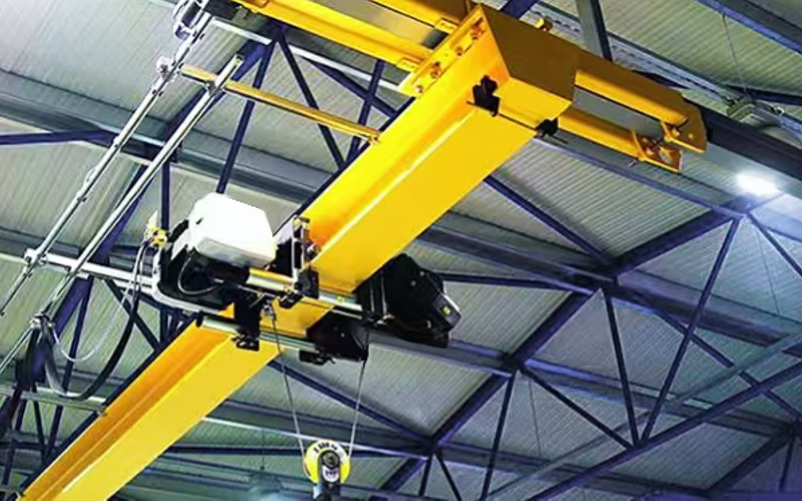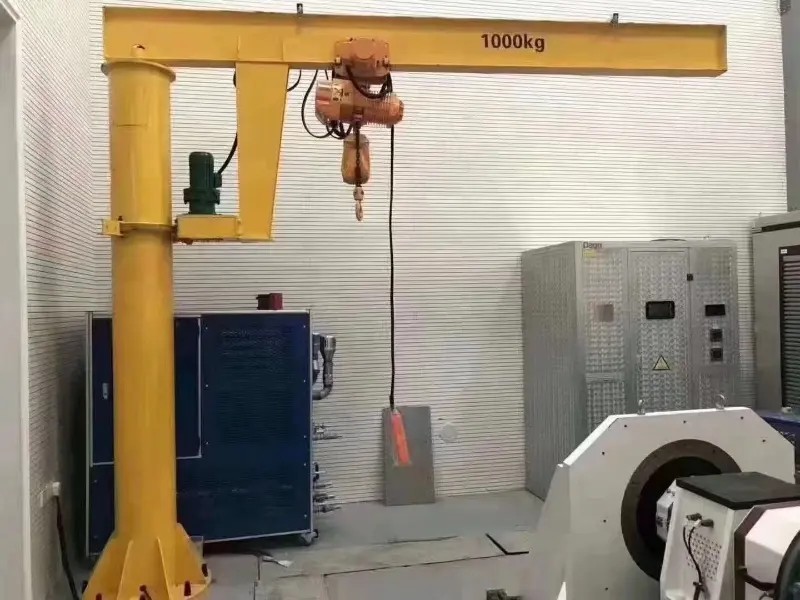


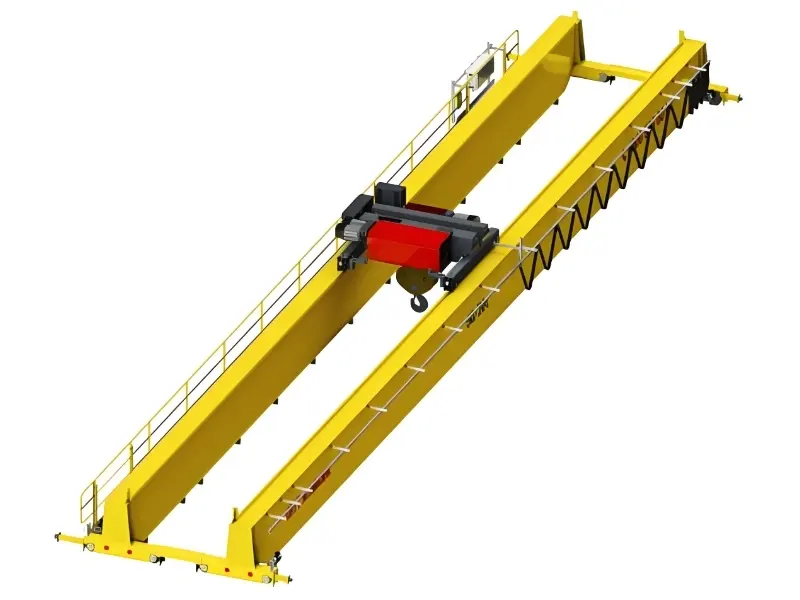
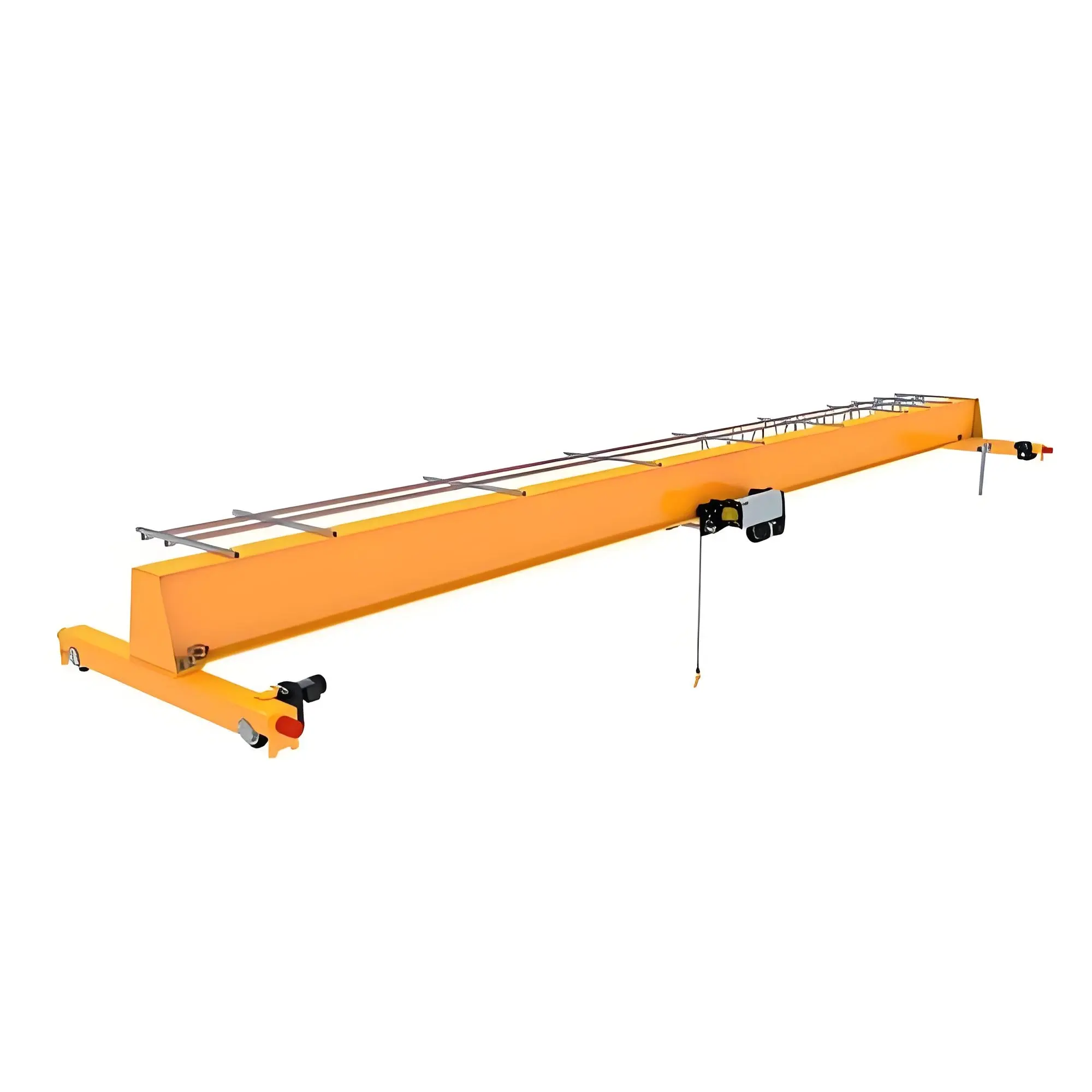
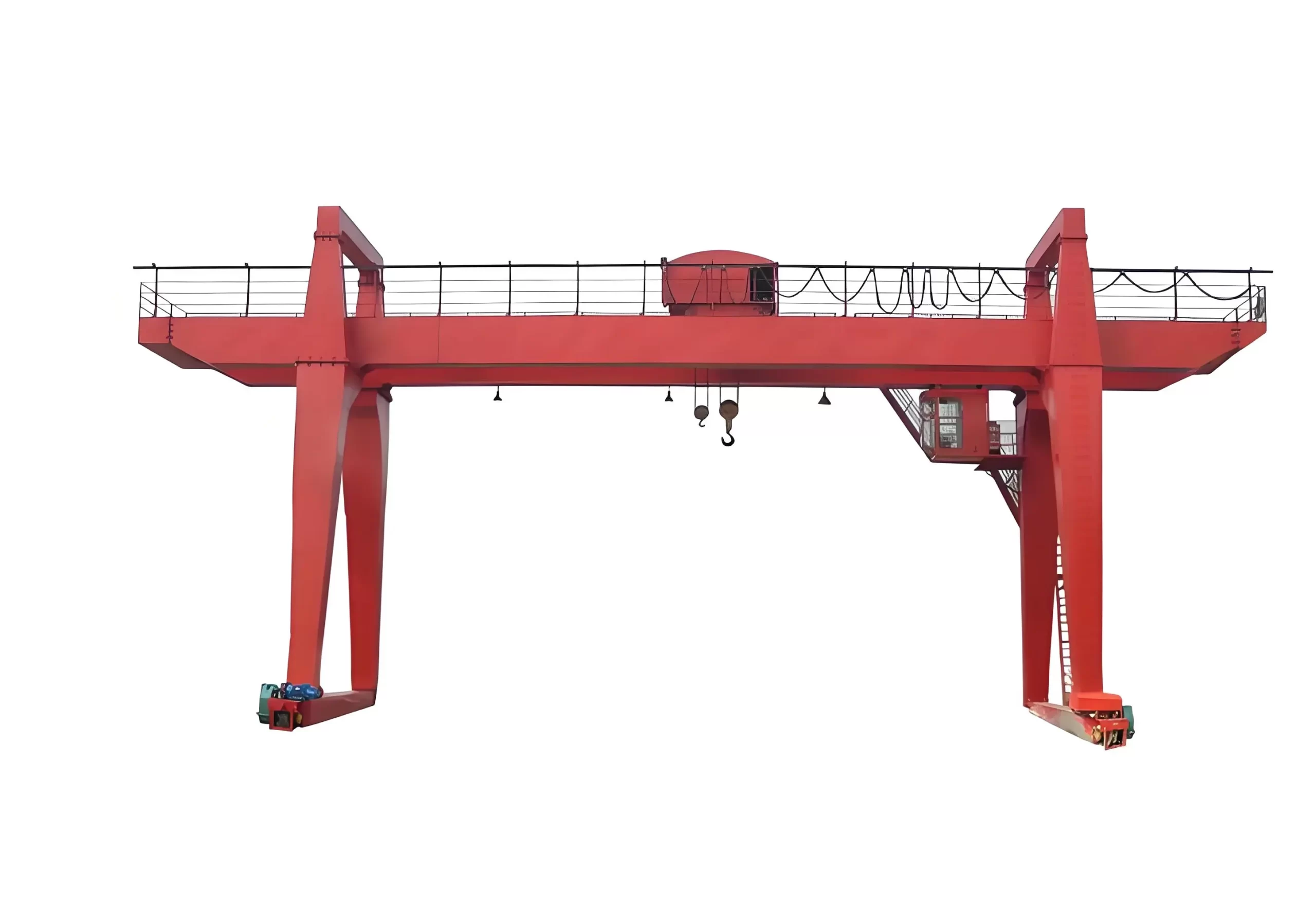
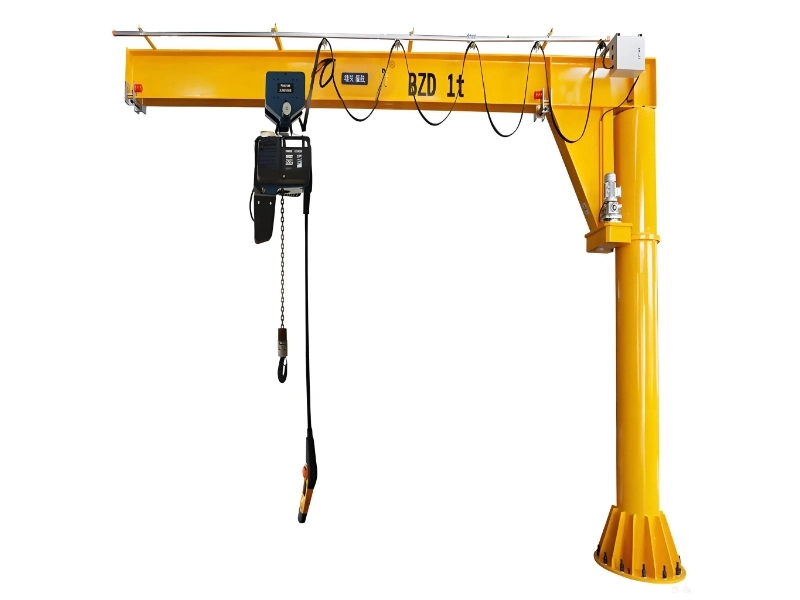
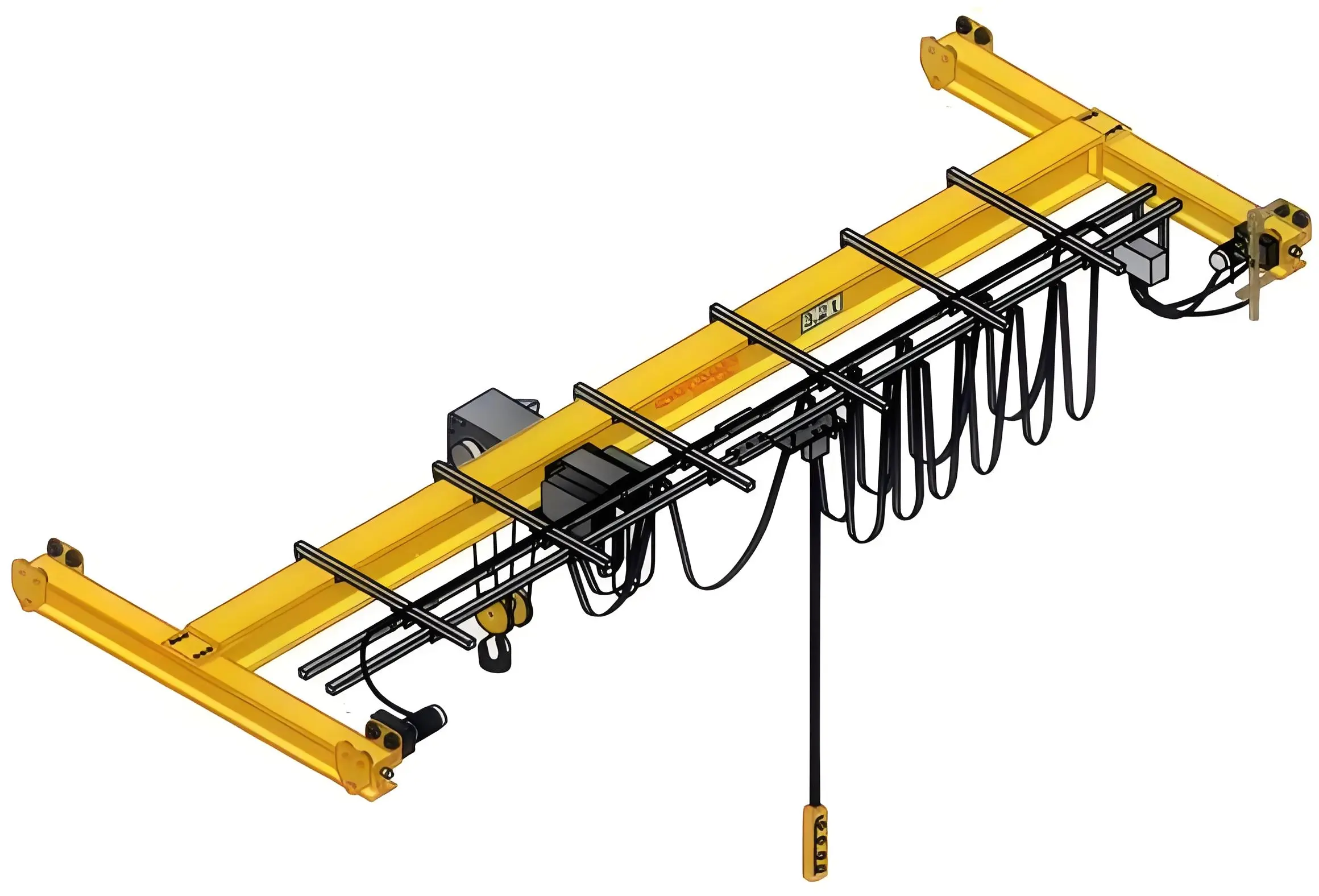
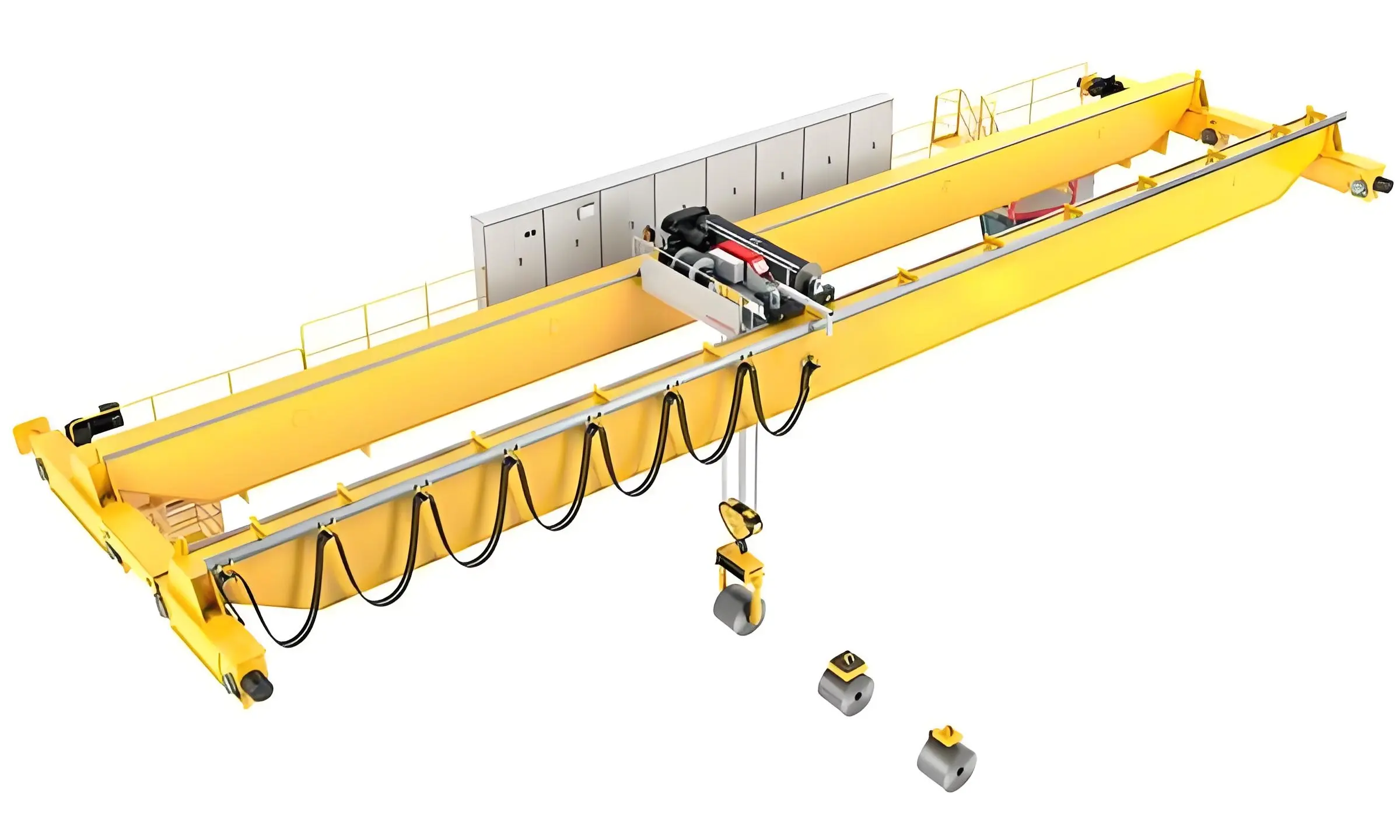
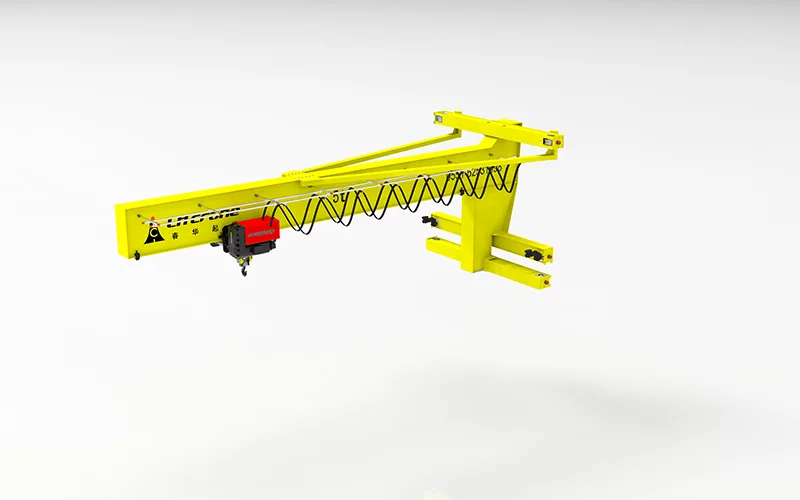
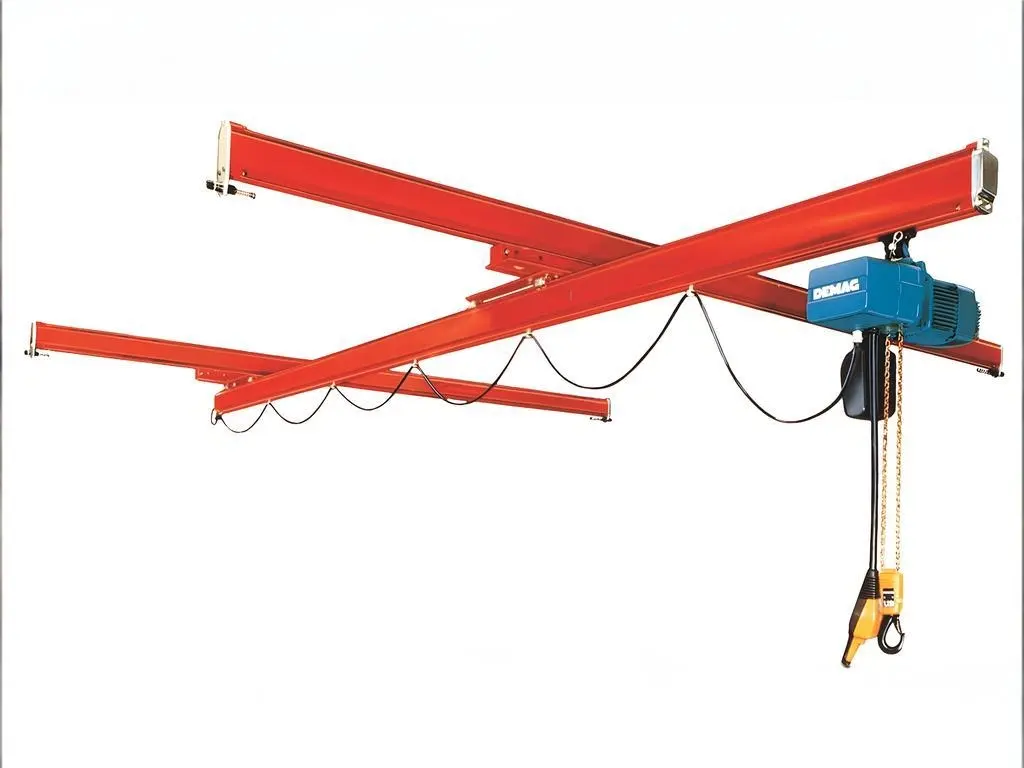
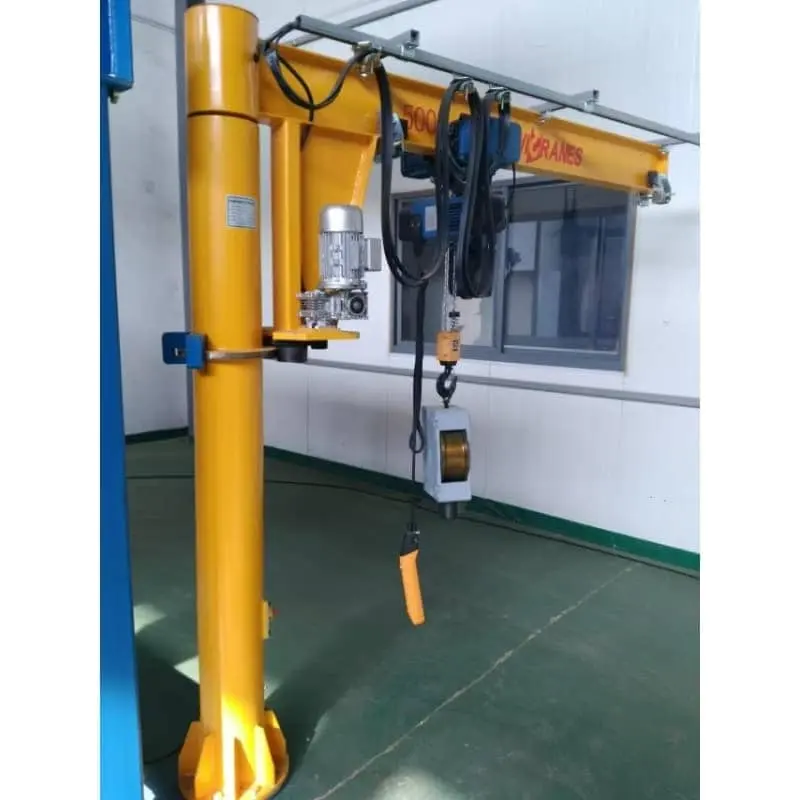
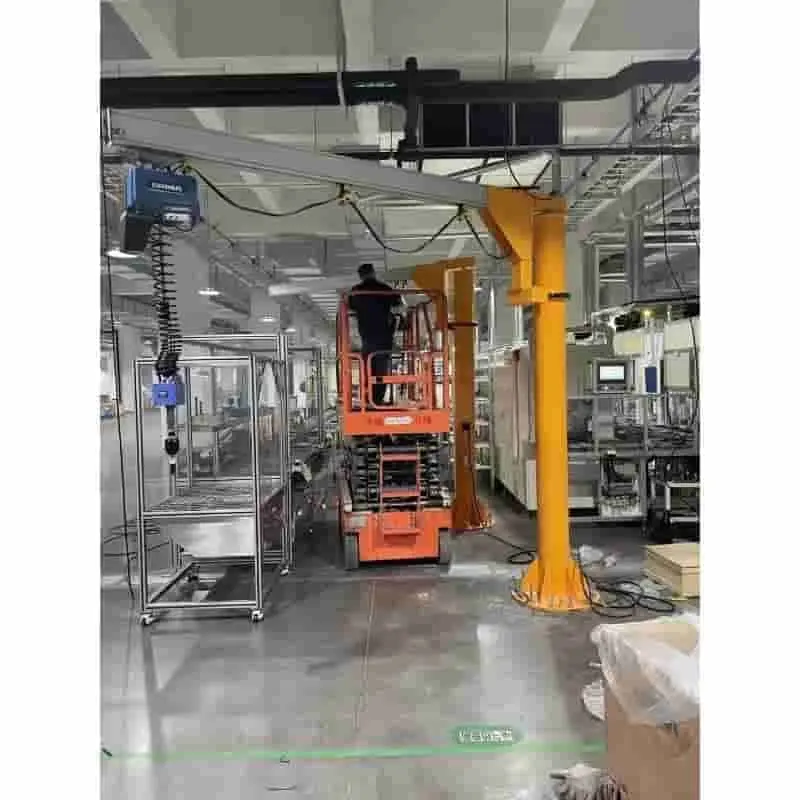
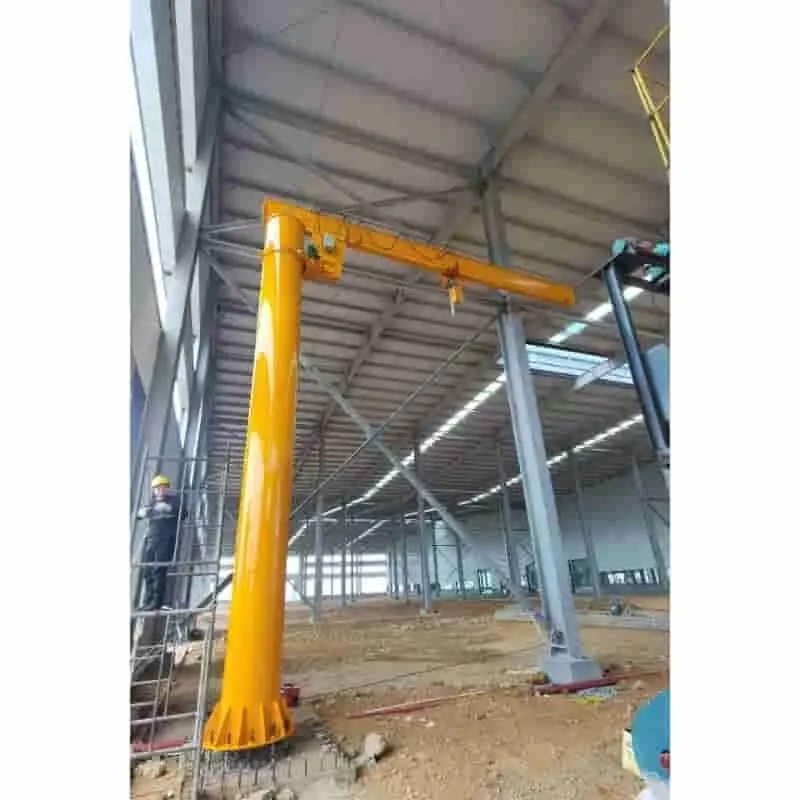
A Cantilever Crane, also commonly referred to as a Jib Crane, is a compact lifting system designed to handle materials within a defined working area. It generally consists of a horizontal cantilever boom, a supporting structure, a hoist, and a trolley or other lifting mechanism.
Unlike an overhead crane that normally travels along a runway covering a larger rectangular working area, a cantilever crane concentrates lifting operations around a specific workstation, machine, loading area, or production process. The horizontal boom can rotate around its supporting structure, while the hoist provides vertical lifting and the trolley can provide horizontal movement along the boom.
Cantilever cranes can be configured according to the required lifting capacity, outreach, lifting height, rotation range, installation conditions, working frequency, and operating environment.
What Is a Cantilever Crane?
A Cantilever Crane is a type of fixed or locally installed lifting equipment in which a horizontal boom extends from a vertical support or structural connection. The boom supports a hoist and may incorporate a trolley for positioning the load.
The term “cantilever” describes the structural arrangement in which the boom extends outward from its support. In many industrial applications, the same basic equipment is also called a jib crane because the horizontal arm functions as a jib.
A typical cantilever crane can perform three basic types of movement:
Lifting and lowering through the hoist
Horizontal positioning through the trolley
Rotational movement through the boom or jib
Depending on its design, the crane may be installed on a floor-mounted column, wall, building column, or another suitably engineered supporting structure. Government material-handling guidance also describes jib cranes as equipment that can be wall-, floor-, or pillar-mounted and used for lifting and positioning materials.
The main purpose of a cantilever crane is not to cover an entire workshop, but to provide efficient lifting and positioning within a localized working area.
How Does a Cantilever Crane Work?
The working principle of a cantilever crane is based on the coordinated operation of the supporting structure, boom, trolley, hoist, and control system.
First, the supporting structure transfers the loads generated during lifting and operation to the building structure, foundation, or other designed support.
Second, the cantilever boom provides the horizontal working reach. Depending on the crane configuration, the boom can rotate around a vertical axis, allowing the lifting point to move through a circular or sector-shaped working area.
Third, the trolley, when provided, moves along the boom. This allows the hoist and suspended load to move toward or away from the supporting point.
Finally, the hoist raises or lowers the load through the lifting mechanism.
The combination of these movements allows an operator to pick up a load at one position and move it to another position within the crane’s working envelope.
For example, at a production workstation, a cantilever crane can lift a component from a nearby storage position, move it along the boom, rotate the boom toward the workstation, and lower the component into position.
The actual operating range depends on the boom length, trolley arrangement, rotation range, lifting height, and installation configuration.
Main Components of a Cantilever Crane
Although the detailed configuration varies according to the application, a cantilever crane generally consists of the following major components.
1. Cantilever Boom
The cantilever boom, also called the jib, is the horizontal structural member extending from the supporting point.
It provides the crane with its working reach and carries the trolley and hoist when these components are included in the design.
The boom must be designed to withstand the loads and forces generated during lifting and operation. Its structural design is closely related to the rated load, outreach, supporting arrangement, and operating conditions.
2. Supporting Column or Mounting Structure
The supporting structure provides the primary structural support for the crane.
Depending on the design, it may consist of a floor-mounted column, wall-mounted connection, building-column connection, or another engineered support.
The supporting structure is particularly important because lifting loads generate forces and moments that must be safely transferred to the foundation or building structure.
For permanently installed cranes, the supporting structure and its connection should be properly evaluated for the intended rated load and operating conditions.
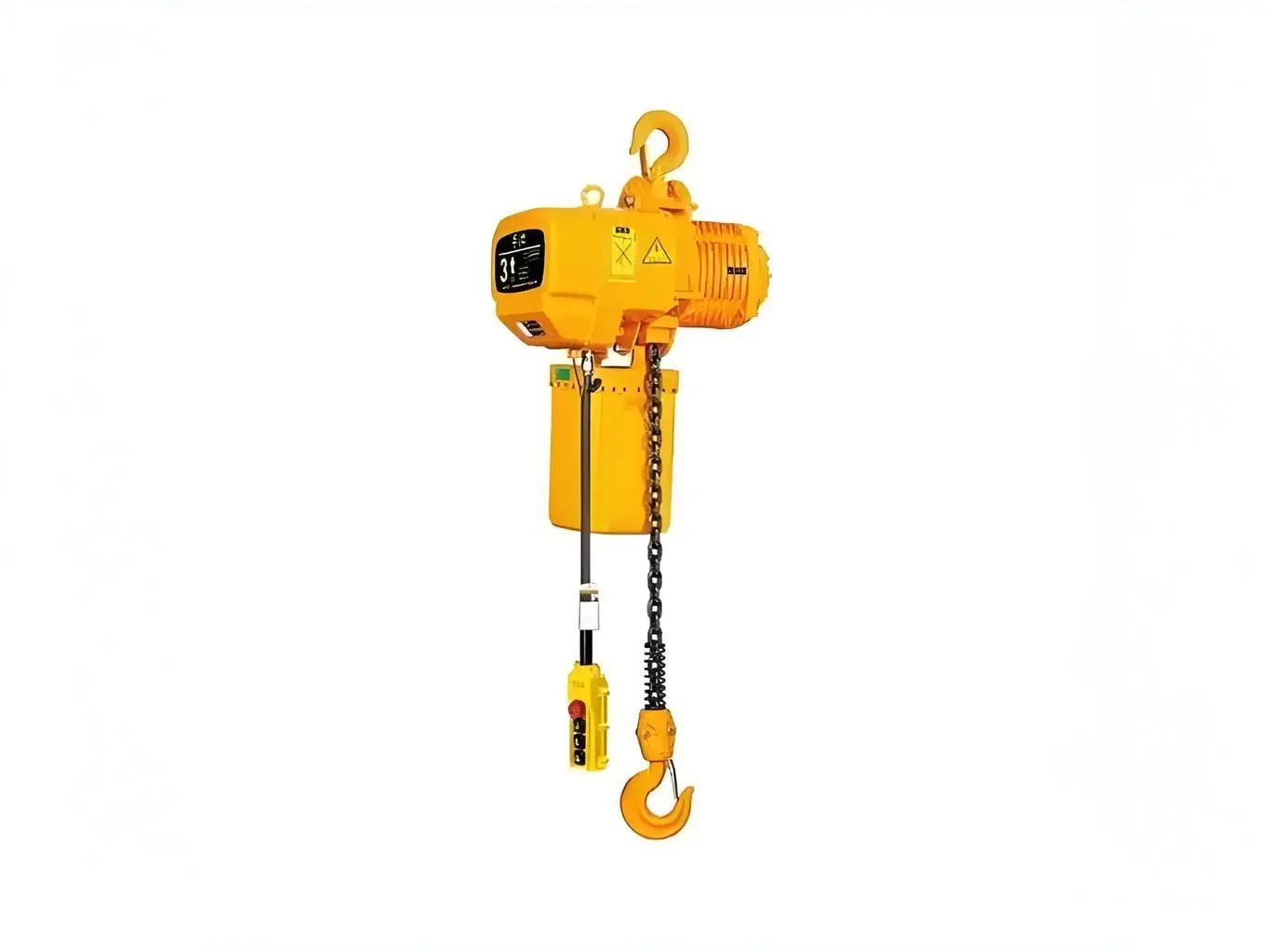
3. Hoist
The hoist is the mechanism responsible for raising and lowering the load.
Depending on the required application, the lifting system can be configured with an appropriate electric or manual hoist.
The selection of the hoist should take into account the rated load, lifting height, lifting speed, duty requirements, power supply, and working environment.
4. Trolley
The trolley carries the hoist and travels along the cantilever boom.
Its function is to provide horizontal positioning along the boom. A trolley may be manually operated or powered, depending on the crane design and operating requirements.
The actual hook coverage is affected not only by the total boom length but also by the trolley and hoist dimensions and the allowable travel range.
5. Slewing or Rotation Mechanism
The rotation mechanism allows the boom to swing around its supporting structure.
Depending on the design, rotation may be manual or powered. The available rotation angle is determined by the crane configuration and the required working area.
Some configurations provide a broad circular working area, while wall-mounted configurations may have a more limited rotation range.
6. Control System
The control system allows the operator to control lifting, lowering, trolley movement, and, where applicable, boom rotation.
The exact control method depends on the crane configuration and customer requirements.
7. Safety and Limiting Devices
Cantilever cranes can incorporate safety and limiting devices appropriate to the crane configuration.
These may include overload protection, travel or lifting limit switches, rotation limits, emergency stop functions, and other protective devices.
Safety requirements vary according to the crane type, installation location, applicable regulations, and operating environment. For example, applicable crane regulations require rated loads to be clearly marked and emphasize proper operation and inspection requirements.
Technical Parameters of a Cantilever Crane
There is no single set of technical parameters that applies to every cantilever crane. The crane should be engineered according to the actual lifting application and installation conditions.
Important technical parameters normally include:
| Parameter | Description |
|---|---|
| Rated Lifting Capacity | Maximum rated load that the crane is designed to lift |
| Boom Length / Outreach | Horizontal distance available for load positioning |
| Lifting Height | Required vertical travel of the hook |
| Rotation Angle | Maximum working rotation of the boom |
| Hoisting Speed | Speed at which the hoist raises or lowers the load |
| Trolley Travel Speed | Speed of trolley movement along the boom |
| Slewing Speed | Speed of powered boom rotation, where applicable |
| Working Class / Duty Requirement | Operating frequency and expected load cycles |
| Power Supply | Electrical requirements for powered components |
| Installation Type | Floor-mounted, wall-mounted, column-mounted, or other configuration |
| Operating Environment | Indoor, outdoor, temperature, dust, humidity, and other conditions |
| Control Method | Pendant, remote, or other suitable control arrangement |
The rated capacity, outreach, supporting structure, and operating conditions should be considered together rather than selecting a crane only according to lifting capacity.
For example, increasing the outreach changes the structural loading on the supporting system. The maximum usable lifting capacity therefore depends on the specific crane configuration and rated design rather than simply the nominal hoist capacity.
The required hook position should also be considered when determining lifting height. The available vertical space must account for the load, lifting accessories, hook arrangement, hoist headroom, and required clearance.
For this reason, a complete technical specification should normally be confirmed according to the customer’s actual working conditions before manufacturing.
Applications of Cantilever Cranes
Cantilever cranes are particularly suitable for lifting operations concentrated within a specific working area.
Manufacturing Workshops
They can be used around production stations to move components, tools, equipment, and other materials.
Their localized working range can make them suitable when a full workshop crane runway is unnecessary.
Assembly Areas
During assembly operations, components often need to be lifted and positioned repeatedly.
A cantilever crane can provide localized lifting and positioning around an assembly workstation.
Machine Loading and Unloading
Cantilever cranes can be installed near machinery where components or workpieces need to be repeatedly loaded or removed.
The boom and trolley provide positioning flexibility within the available working envelope.
Maintenance Areas
Maintenance work frequently requires lifting motors, components, tools, and other equipment.
A suitable cantilever crane can provide dedicated lifting capability around a maintenance station.
Warehouses and Material Handling Areas
Cantilever cranes can also be used for localized material handling where loads need to be transferred between storage positions, workstations, vehicles, or processing equipment.
Loading and Unloading Points
When properly designed for the required working conditions, a cantilever crane can be used around loading areas where materials need to be lifted and positioned within a defined radius.
The actual application should always be evaluated according to the required load, working range, structural support, operating frequency, and applicable safety requirements.
Advantages of Cantilever Cranes
1. Localized Lifting Capability
A cantilever crane is designed to serve a defined working area rather than an entire workshop.
This makes it suitable for individual workstations, machinery, assembly areas, and other localized lifting applications.
2. Flexible Load Positioning
The combination of boom rotation, trolley movement, and hoisting allows loads to be positioned at different points within the working envelope.
3. Efficient Use of Working Space
Because the crane concentrates its coverage around a specific area, it can provide lifting capability without requiring a complete overhead runway system throughout the facility.
4. Suitable for Repetitive Lifting
For workstations that repeatedly handle similar types of loads, a dedicated cantilever crane can simplify material handling and reduce unnecessary manual movement.
5. Configurable Design
Cantilever cranes can be configured according to factors such as lifting capacity, outreach, lifting height, rotation range, installation method, control system, and working environment.
6. Adaptable to Different Installation Conditions
Depending on the design, cantilever cranes can be installed using different supporting arrangements, including floor-mounted and wall- or column-mounted configurations.
However, the supporting structure must be suitable for the loads and forces generated by the crane. Any modification that affects crane capacity or safe operation should be evaluated and approved according to the applicable requirements.
How to Choose a Cantilever Crane?
Selecting a cantilever crane should begin with the actual lifting task rather than the crane model.
1. Determine the Rated Load
Identify the maximum load that needs to be lifted, including relevant lifting accessories where applicable.
The selected rated capacity must be sufficient for the intended load and operating conditions.
2. Determine the Required Outreach
Measure the horizontal distance from the supporting point to the farthest required lifting position.
The outreach directly affects the working area and structural loading of the crane.
3. Determine the Required Lifting Height
Identify the lowest and highest hook positions required during normal operation.
The required lifting height should consider the load dimensions, rigging equipment, surrounding machinery, and available building clearance.
4. Determine the Required Rotation Range
Decide whether the crane needs partial rotation or a larger working envelope.
The required rotation range depends on the layout of the workstation and the positions between which the load must be moved.
5. Check the Supporting Structure
The foundation, wall, column, or other supporting structure must be suitable for the crane.
This is especially important for cantilever configurations because the lifted load creates forces and moments at the supporting point.
6. Select the Hoist and Trolley
The hoist should match the required lifting capacity, lifting height, lifting speed, duty requirements, and operating environment.
The trolley should provide the required horizontal positioning range along the boom.
7. Consider the Working Environment
The crane selection should take into account whether it will operate indoors or outdoors and whether the environment involves dust, moisture, temperature variation, corrosive conditions, or other special requirements.
8. Confirm Safety and Applicable Standards
The final design should comply with the safety requirements and technical standards applicable to the destination market and specific application.
Rated load, structural design, safety devices, installation, inspection, and operation should all be considered as part of the complete crane system.
Chunhua Crane Solutions for Cantilever Cranes
Chunhua provides customized jib/cantilever crane solutions according to the required lifting application and installation conditions.
The company’s cantilever crane information identifies the equipment as a lifting system consisting of a horizontal boom or jib connected to a vertical mast or pillar. Different configurations can be considered according to the customer’s application, including wall-mounted, floor-mounted, and mobile arrangements.
For customized projects, the key requirements should be confirmed before the final configuration is determined, including:
Rated lifting capacity
Boom length and required outreach
Lifting height
Rotation range
Hoist and trolley requirements
Installation method
Working frequency
Indoor or outdoor operating conditions
Power supply
Required safety and control functions
Chunhua’s published information also highlights safety protection features such as overload protection and limit switches, together with customized design and installation considerations.
For an accurate quotation and technical proposal, customers should provide the basic working conditions and lifting requirements. The crane can then be configured according to the actual application rather than relying on a standard specification.
Frequently Asked Questions About Cantilever Cranes
What is a cantilever crane?
A cantilever crane is a lifting system with a horizontal boom extending from a supporting structure. The boom can provide rotational coverage, while a hoist and trolley can lift and position loads within the working area.
Is a cantilever crane the same as a jib crane?
In many industrial applications, the terms cantilever crane and jib crane are used to describe similar lifting equipment. The exact terminology can vary according to the structural configuration and application.
How does a cantilever crane move a load?
The hoist raises and lowers the load, the trolley can move the hoist along the boom, and the boom can rotate around its supporting point when the crane is designed with a slewing function.
Can a cantilever crane be installed on a wall or column?
Yes. Depending on the design and structural conditions, cantilever or jib cranes can be installed using different supporting arrangements, including wall- and column-mounted configurations. The supporting structure must be verified for the intended crane loads.
Can the rotation angle be customized?
The rotation range depends on the crane configuration and installation conditions. Different working areas may require different rotation arrangements.
How do I choose the right cantilever crane?
The main factors include rated capacity, outreach, lifting height, rotation range, working frequency, installation structure, hoist and trolley requirements, operating environment, and applicable safety requirements.
Does a cantilever crane need a special foundation?
This depends on the installation type. Floor-mounted configurations may require an appropriately designed foundation, while wall- or column-mounted configurations transfer loads to the supporting building structure. The actual foundation or structural requirements must be determined from the crane design and site conditions.
Can Chunhua provide a customized cantilever crane?
Yes. Cantilever/jib crane configurations can be developed according to the customer’s lifting requirements, working area, installation conditions, and other project specifications.
Contact Chunhua Crane
Choosing the correct Cantilever Crane requires more than selecting a lifting capacity. The boom outreach, hook height, rotation range, supporting structure, hoist, trolley, working frequency, and operating environment should all be considered together.
If you are looking for a Cantilever Crane / Jib Crane for a workshop, production line, warehouse, maintenance area, loading point, or other industrial application, provide the following information for a preliminary technical evaluation:
Required lifting capacity
Required lifting height
Required boom length or outreach
Required rotation angle
Application and working environment
Installation location
Working frequency
Power supply requirements
Photos, drawings, or dimensions of the installation area
Based on these requirements, Chunhua can evaluate the application and provide a suitable cantilever crane configuration and technical proposal.