

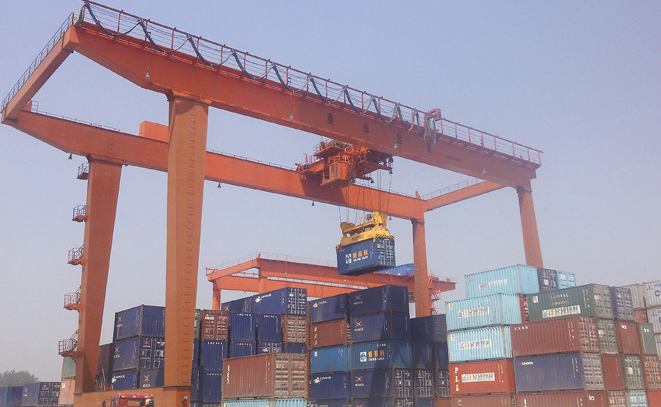
In modern global logistics, maximizing spatial density and operational throughput at port terminals and inland freight hubs is crucial. Rail-Mounted Container Gantry Cranes (RMGs) represent primary heavy-lifting infrastructure designed to handle standardized freight containers with high precision and operational stability. As intermodal cargo volumes grow, evaluating the mechanical structure, operational workflows, and selection metrics for RMG systems is essential for terminal planners and crane specifiers.
What Is a Rail-Mounted Container Gantry Crane?
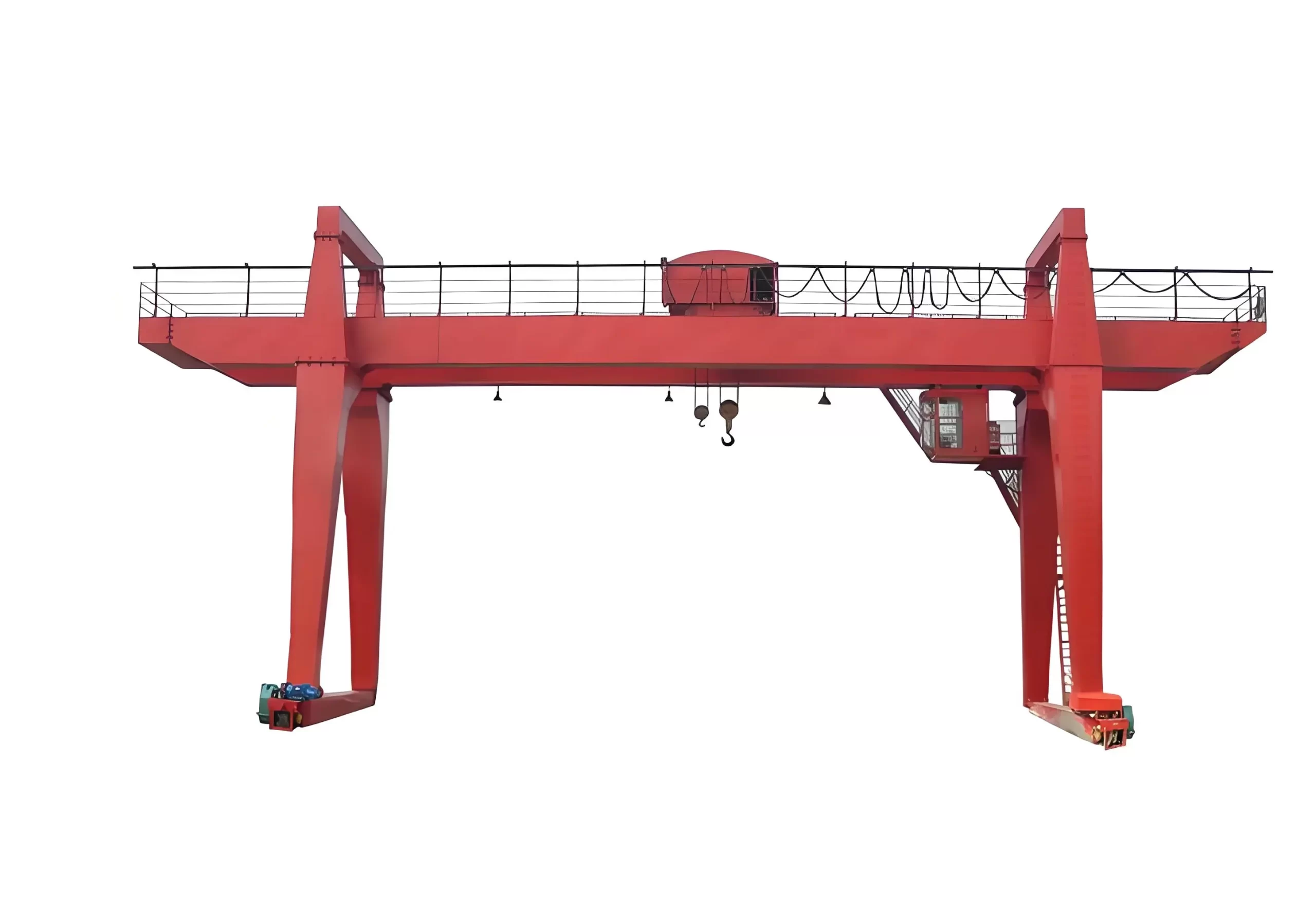
A Rail-Mounted Container Gantry Crane (RMG) is a specialized type of gantry crane engineered specifically for stacking, transferring, and sorting ISO-standard shipping containers (20-foot, 40-foot, and 45-foot units).
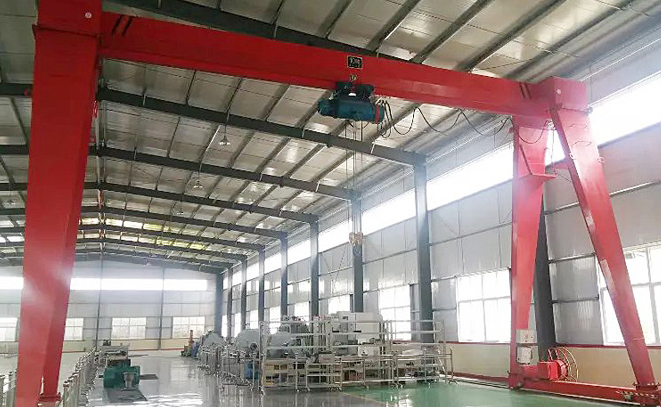
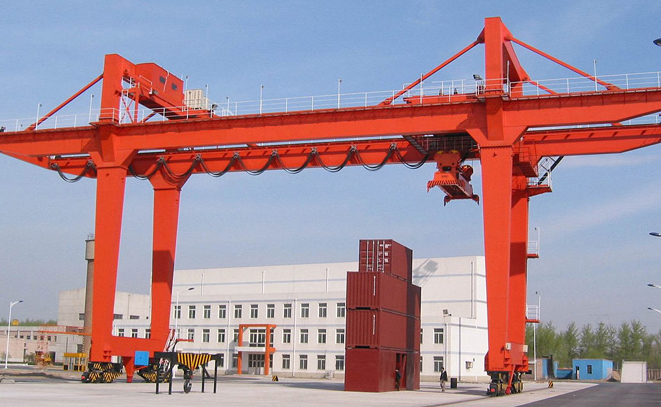
Unlike mobile rubber-tyred variants, an RMG travels along fixed parallel steel rails mounted on reinforced concrete foundations within container yards. The structural portal frame spans across multiple container stack rows, truck driving lanes, or railway tracks, providing a rigid platform for heavy-duty lifting and seamless integration with electric power grids.
How Does an RMG Crane Work?
An RMG crane executes precise three-dimensional container transport using three synchronized motion axes:
Gantry Travel (Longitudinal Motion): Driven by electric motors mounted on bogie assemblies, the entire crane travels down the yard along ground rails.
Trolley Travel (Transverse Motion): A specialized trolley chassis runs along overhead rails mounted on the main girders, traversing perpendicularly across the stack span.
Hoisting Motion (Vertical Lift): An electric winch system raises or lowers a container spreader via high-tensile steel wire ropes suspended from the trolley.
Modern RMGs incorporate anti-sway systems (utilizing mechanical wire rope reeving geometry or electronic control software) to stabilize suspended loads during rapid acceleration and braking.
Main Components
An RMG crane consists of several major structural and electro-mechanical assemblies:
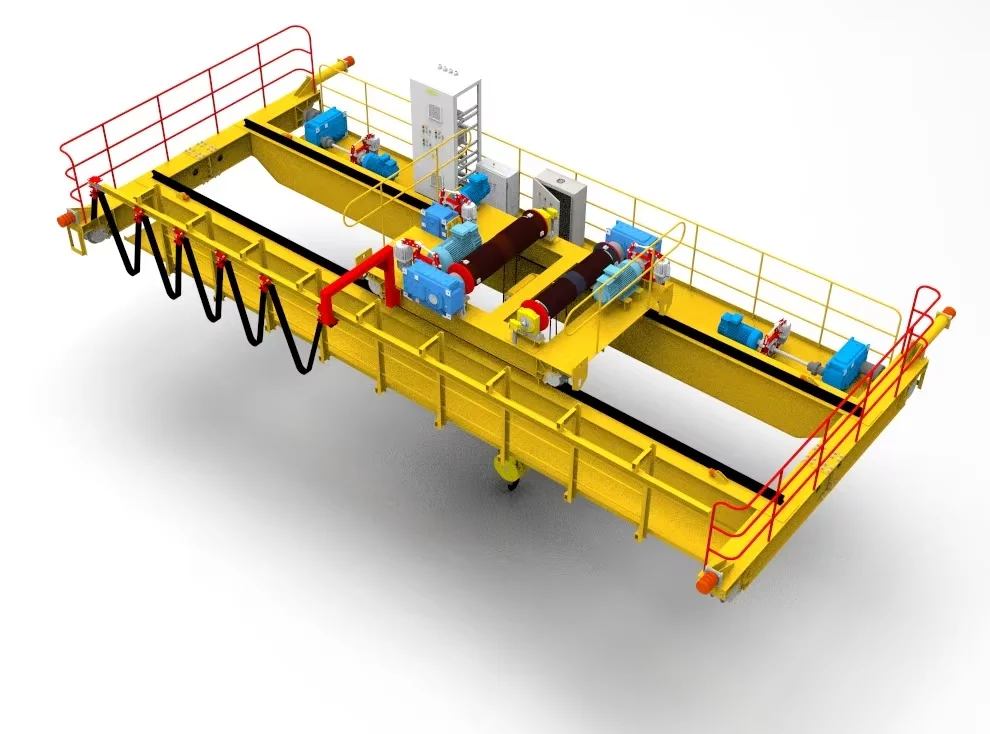
Gantry Steel Structure: The primary framework composed of box-type main girders, rigid and flexible leg outriggers, ground beams, and maintenance walkways.
Hoisting Mechanism: Consists of heavy-duty electric motors, reduction gearboxes, rope drums, fail-safe brakes, and wire rope reeving.
Trolley Unit: The mobile upper frame containing the cross-travel drive and hoisting machinery.
Telescopic Container Spreader: An attachment outfitted with electro-hydraulic twist-locks that engage container corner castings.
Wheel Bogies & Gantry Drives: Cast or alloy steel wheels mounted on articulated bogies that distribute heavy dynamic loads evenly along the ground rail.
Electrical & Control Infrastructure: Houses Programmable Logic Controllers (PLCs), Variable Frequency Drives (VFDs), power collection systems (cable reels or conductor bars), and operator cabin or remote-control modules.
Especificações técnicas
Key technical parameters for standard industrial RMG cranes typically fall within the following ranges:
| Technical Parameter | Standard Specification Range |
| Safe Working Load (Capacity) | 30.5 t – 65 t (Single or Twin-Lift) |
| Gantry Span | 15 m – 45 m+ (Spanning 4 to 12+ stack rows) |
| Levantamento de peso | 12 m – 26.9 m (1-over-3 up to 1-over-8 container tiers) |
| Cantilever Reach | 0 m – 20 m (Optional single or double cantilevers) |
| Hoisting Speed | 12 – 28 m/min (Rated Load) / 24 – 56 m/min (Unloaded) |
| Trolley Travel Speed | 50 – 70 m/min |
| Gantry Travel Speed | 40 – 130 m/min |
| Duty Classification | ISO A6 / A7 / A8 (FEM 3m / 4m / 5m) |
| Power Supply | High-Voltage Cable Reel or Enclosed Conductor Bar |
Aplicações
RMG cranes are deployed in specialized logistics infrastructure where predictable, high-density handling routes are needed:
Seaport Container Terminals: Stacking, sorting, and holding export/import containers within high-throughput yard blocks behind ship-to-shore quay cranes.
Railway Intermodal Yards: Spanning multiple tracks to perform direct ship-to-rail or rail-to-truck container transfers.
Inland Container Depots (ICDs): Managing customs processing, regional consolidation, and long-term stack storage.
Automated Yards (ARMG Operations): Operating as automated units guided by laser scanning, optical positioning, and remote supervisory systems.
Vantagens
Optimized Stacking Density: Wide spans and high lift capacity allow containers to be stacked tightly up to 6–8 tiers high, maximizing land utilization.
Environmental Sustainability: Grid-powered electric operation eliminates direct site emissions and minimizes ambient operational noise.
Precision and Automation Suitability: Steel wheels on rigid steel tracks provide predictable positioning, making RMGs easier to automate than rubber-tyred alternatives.
Lower Operating Costs: Electric drive systems require less power expenditure and lower routine engine maintenance than diesel-powered machines.
Long Structural Service Life: Fixed track alignment reduces structural distortion, supporting continuous service life expectations exceeding 20–25 years.
RMG vs. RTG
Evaluating RMGs against Rubber-Tyred Gantry Cranes (RTGs) reveals distinct trade-offs in mobility, infrastructure requirements, and operational costs:
| Recurso | Rail-Mounted Gantry (RMG) | Rubber-Tyred Gantry (RTG) |
| Travel Medium | Fixed steel ground tracks | Heavy rubber tires |
| Yard Mobility | Confined to installed rail tracks | Flexible; can turn and switch yard blocks |
| Fonte de energia | Main electric grid (cable reel/conductor) | Diesel generator, hybrid, or cable-connected |
| Primary Advantage | High automation capability & throughput efficiency | Lower initial civil cost & high yard flexibility |
| Civil Infrastructure | Requires track foundations & power delivery lines | Requires standard paved yard surfaces |
| Operational Lifespan | ~25 Years | ~15 Years |
How to Choose an RMG Crane
When selecting an RMG configuration, terminal operators evaluate several core criteria:
Terminal Throughput Targets: Choosing hoist speeds, drive power ratings, and single vs. twin-lift spreaders based on target annual TEU volumes.
Yard Layout Geometry: Setting the required span length, stack height, and single/double cantilever extensions based on lane layouts and stack widths.
Operational Mode: Choosing between manual operator cabin control, semi-automated remote operator desks, or fully automated software control (ARMG).
Power Infrastructure: Verifying site substation voltage, transformer capacity, and cable reel vs. conductor bar routing options.
Chunhua Cranes RMG Solutions
Chunhua Cranes manufactures heavy industrial overhead and gantry lifting equipment, offering custom Rail-Mounted Container Gantry Crane solutions tailored to specific terminal configurations:
Tailored Structural Configurations: Engineering custom spans, lifting heights, and cantilever extensions to match customer terminal dimensions.
Advanced Automation Options: Integrating anti-sway control, auto-positioning laser sensors, dynamic 3D stack profiling, and remote operating systems.
Energy-Efficient Electric Drives: Implementing variable frequency drives (VFDs) and regenerative energy feedback systems to lower power consumption.
Industrial Compliance Standards: Designing equipment according to FEM, ISO, and international safety codes to ensure reliable performance under demanding marine or inland conditions.
Perguntas frequentes
Q1: What standard container sizes can an RMG crane handle?
A1: RMGs handle ISO 20ft, 40ft, and 45ft containers using telescopic spreaders, as well as twin 20ft container configurations when configured with a twin-lift spreader.
Q2: Can RMG cranes operate fully automatically without a driver inside the cab?
A2: Yes. Automated Rail-Mounted Gantry Cranes (ARMGs) utilize laser sensors, optical positioning systems, and automated software control to execute stacking and handling routines automatically or via remote operators.
Q3: How do RMG cranes receive electrical power?
A3: Power is drawn directly from the facility’s electrical grid using high-voltage cable reels (which spool and unspool as the crane travels along the rail) or enclosed ground conductor bars.
Q4: What civil infrastructure is needed before installing an RMG?
A4: RMG installation requires reinforced concrete foundations with embedded steel ground rails engineered to absorb wheel loads, dynamic crane movements, and wind forces.