


Table of Contents
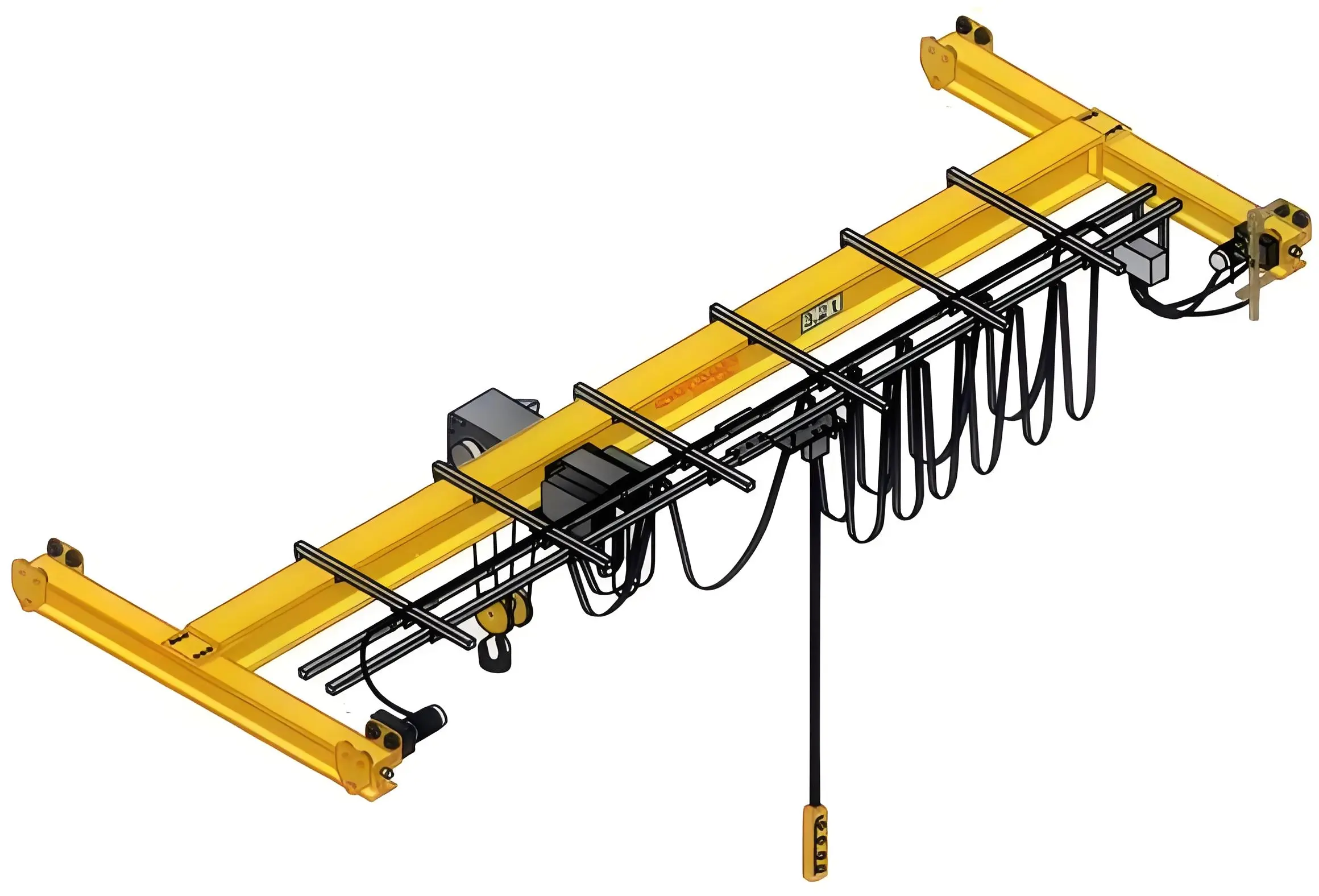
When planning a factory material handling system, companies often face a crucial choice: choose the simpler single-girder model, or invest in the more powerful double-girder crane?
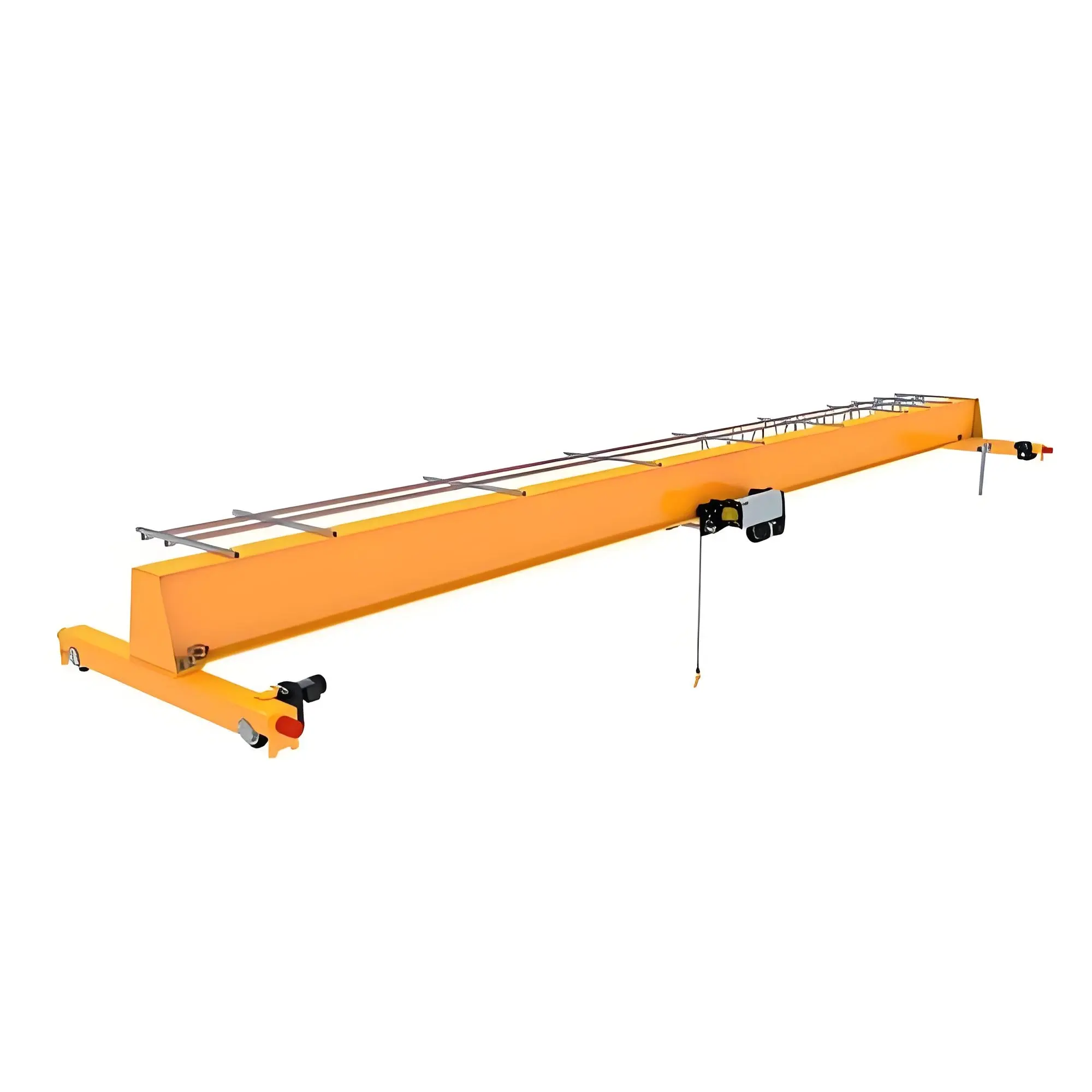
While single-girder cranes excel in lightweight operations, for heavy industries demanding high strength, large tonnage, and ultimate stability, double-girder industrial cranes, with their superior physical structure and technological advantages, have become an irreplaceable production tool. This article will provide an in-depth analysis of the five core advantages of double-girder cranes in industrial applications by 2025.
Greater Lifting Height and Space Utilization
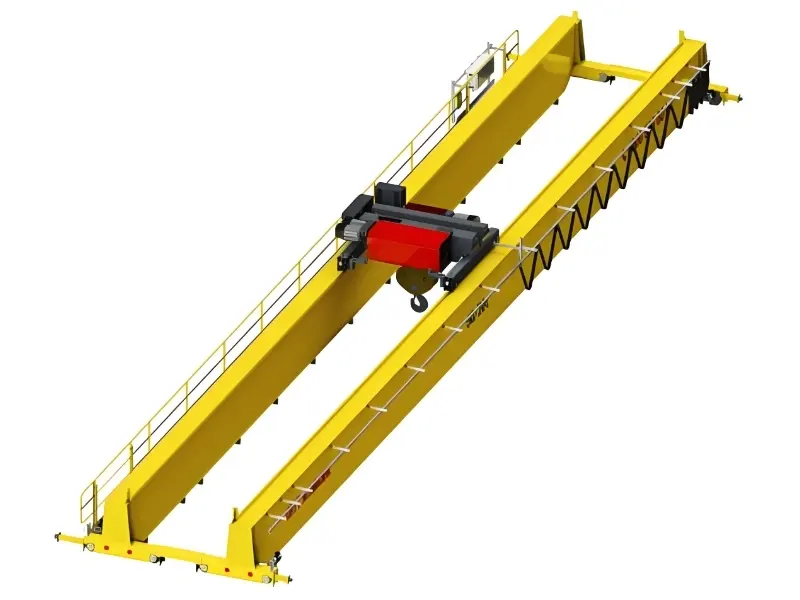
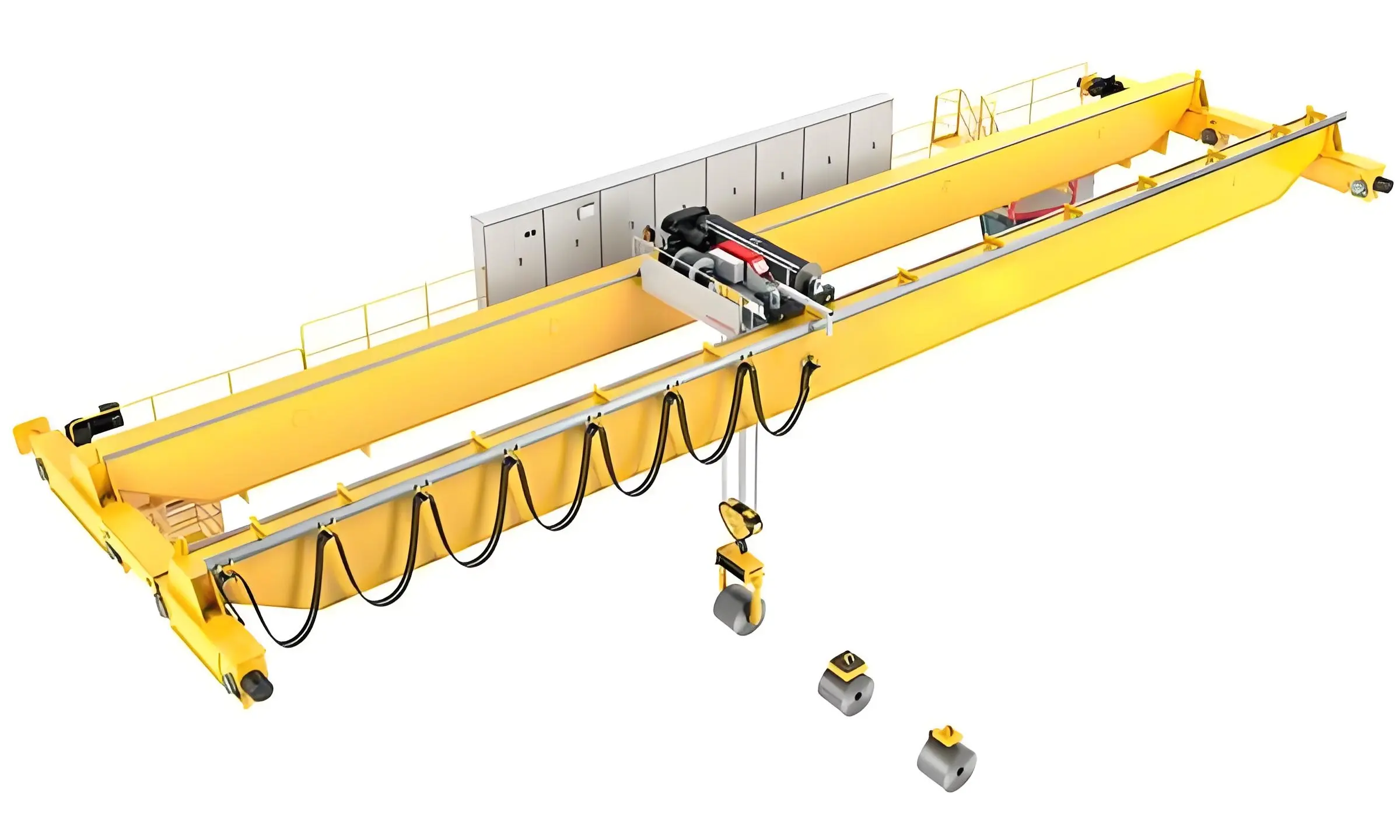
Unlike single-girder cranes, the trolley of a double-girder crane typically operates above two main beams. The most direct benefit of this design is the ability to achieve a greater effective lifting height.
Advantage: In factory environments with limited height, the double-girder structure allows the hook to be raised higher, enabling higher-density stacking of goods.
Superior Load Capacity and Span Performance
If you need to move loads exceeding 20 tons, or have a factory span exceeding 30 meters, a high-efficiency double-girder crane is the only scientifically sound choice.
As a leading manufacturer of double-girder cranes, we typically utilize the torsional rigidity of the double girder to offset the deflection issues caused by ultra-long spans, ensuring structural safety during heavy lifting.
Higher Working Class and Durability
In the steel, energy, or mold manufacturing industries, equipment often requires 24-hour continuous operation.
Durability: Double-girder cranes are typically designed for a working class of A5 (M5) or even A8 (M8). This means that their motors, gearboxes, and metal structures can withstand more frequent starts and stops, making them truly durable double-girder cranes.
Expandability of Auxiliary Mechanisms (Sub-Hook Configuration)
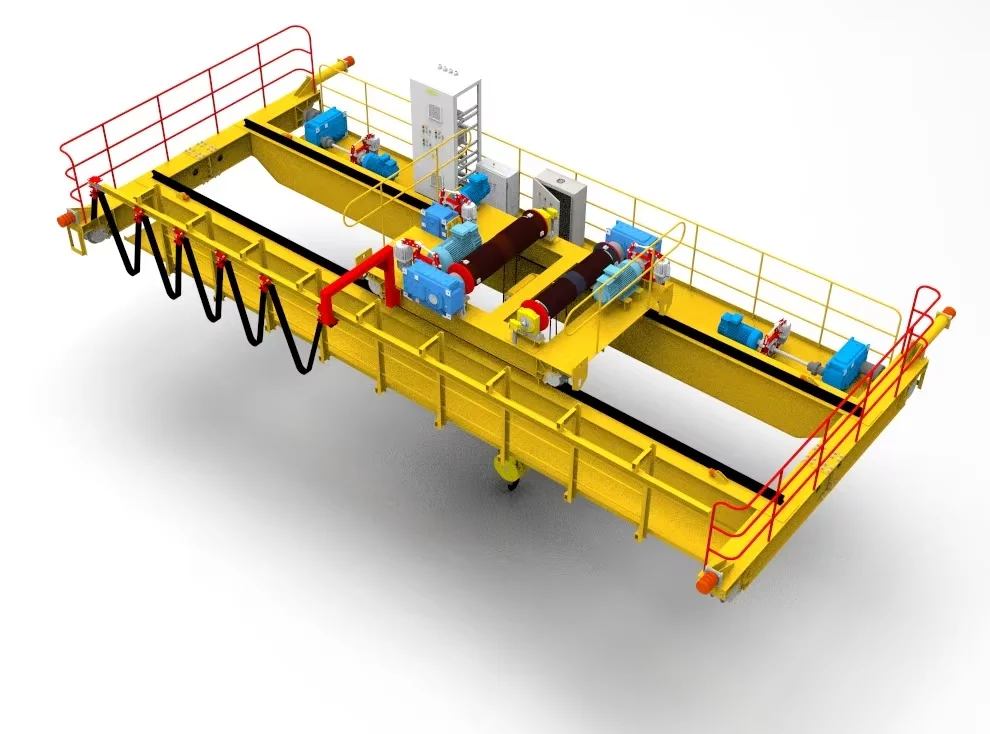
The double-girder trolley has a spacious platform, making the installation of an auxiliary lifting mechanism (sub-hook) very easy.
Application Scenarios: The main hook is responsible for lifting heavy objects (e.g., 50t), while the auxiliary hook is responsible for quickly moving lightweight lifting tools (e.g., 5t) or assisting in tilting workpieces. This “one large, one small” configuration greatly enhances the flexibility of industrial lifting solutions.
Ease of Maintenance and Safety
Double-girder cranes typically have walkways and guardrails above the main girder.
High-Safety Cranes: Maintenance personnel can safely stand in the walkway to inspect the trolley traveling mechanism, electrical cabinets, and trolley without the need for an additional lifting platform. This design not only ensures personnel safety but also reduces downtime for routine inspections.
Summary: How to Choose Your Industrial Lifting Partner?
Choosing a double-girder crane is a long-term investment. When selecting a double-girder crane manufacturer, it is essential to consider not only the initial purchase cost of the equipment but also its R&D capabilities in the field of automated cranes, such as anti-sway systems and remote diagnostic functions.
For companies that need to handle loads of 10 tons or more and pursue high-frequency operations, the high stability and low maintenance costs offered by double-girder cranes will provide you with a better return on investment (ROI).