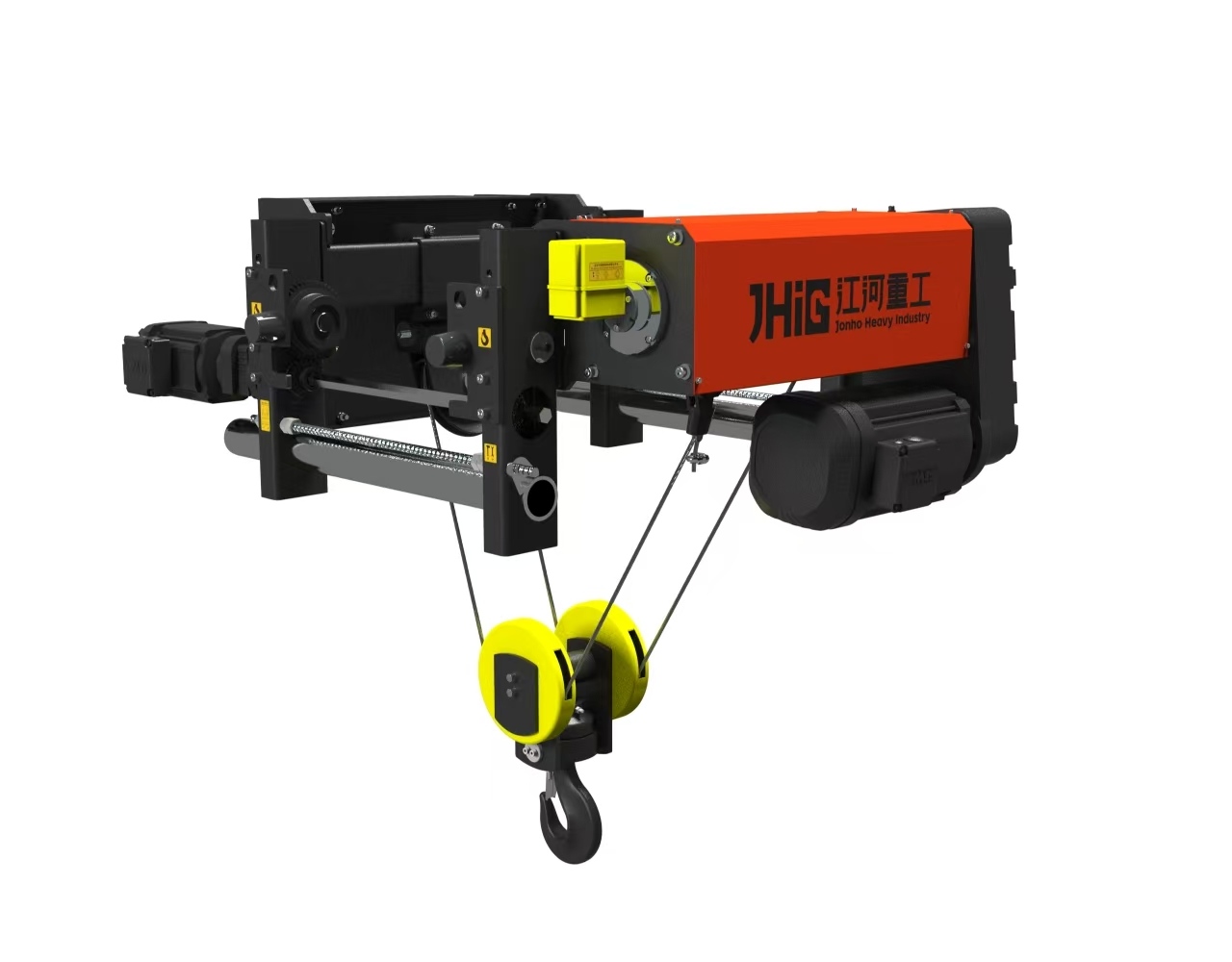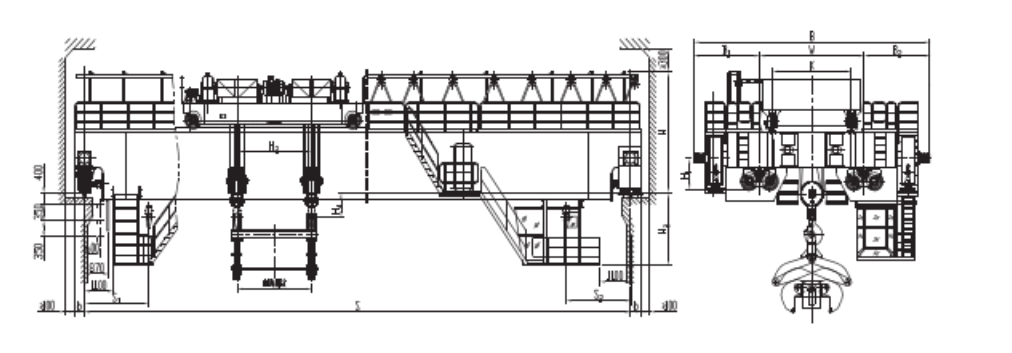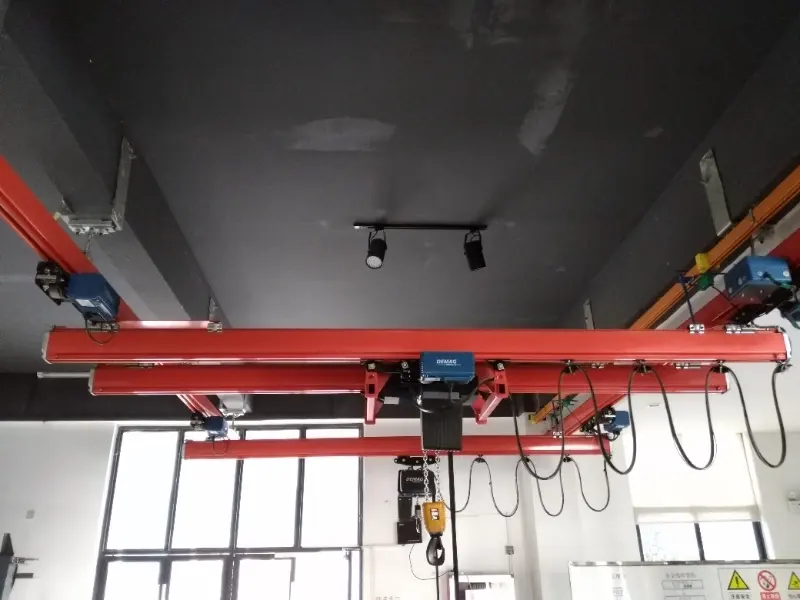


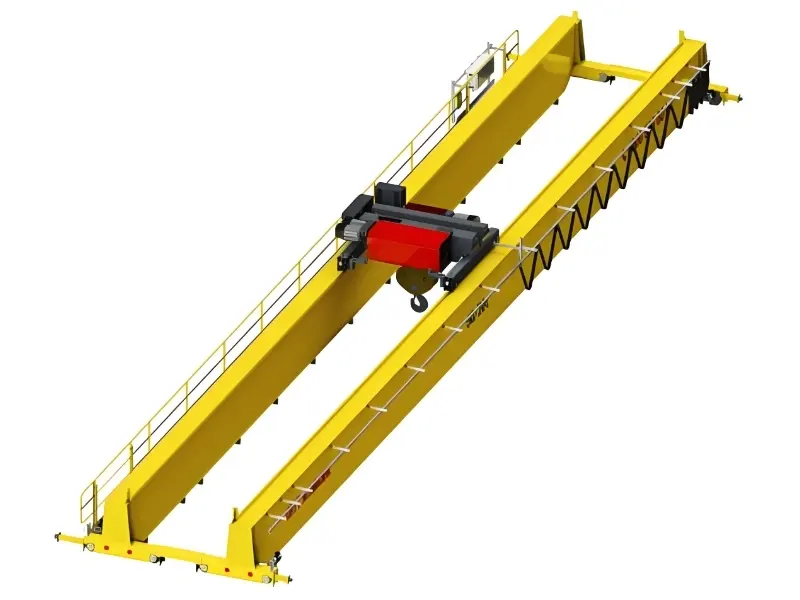
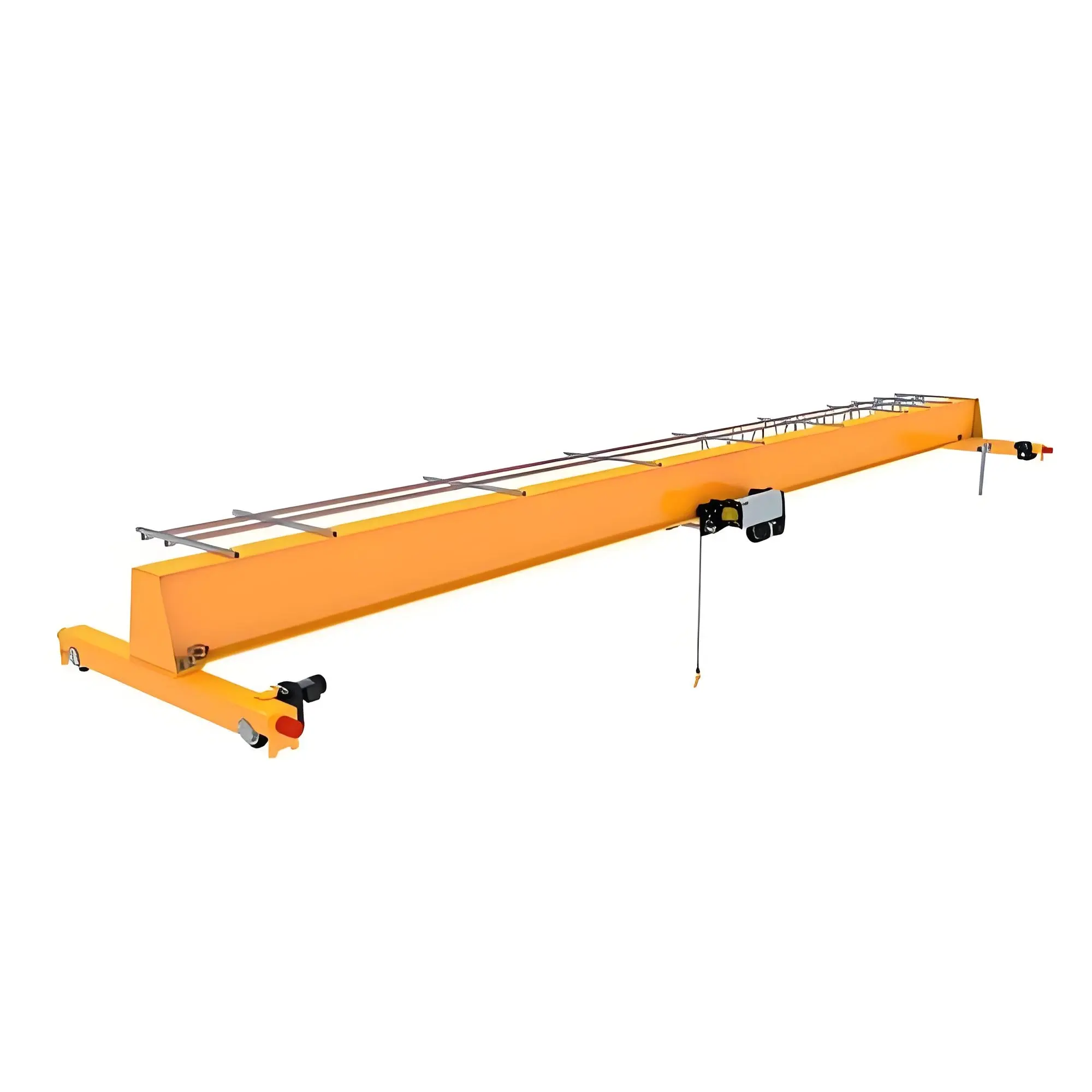
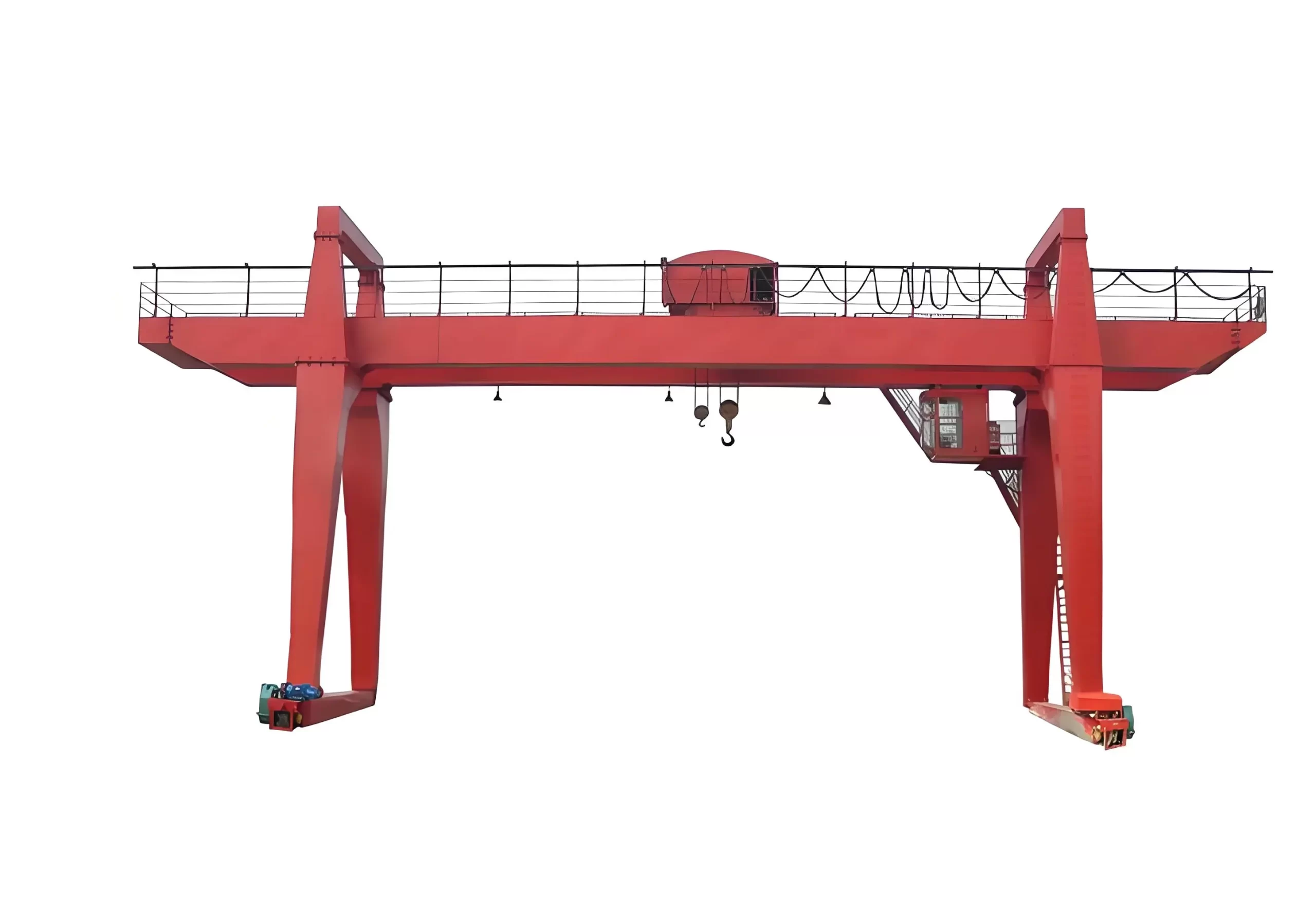
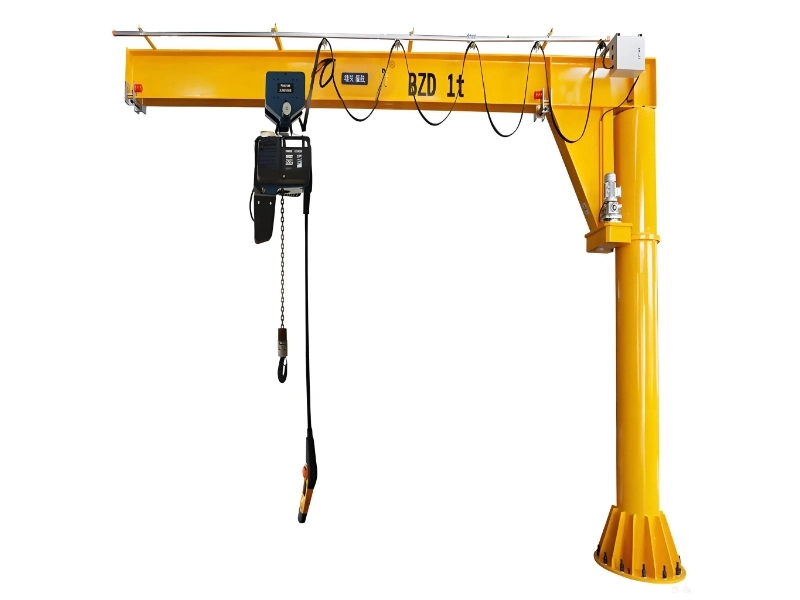
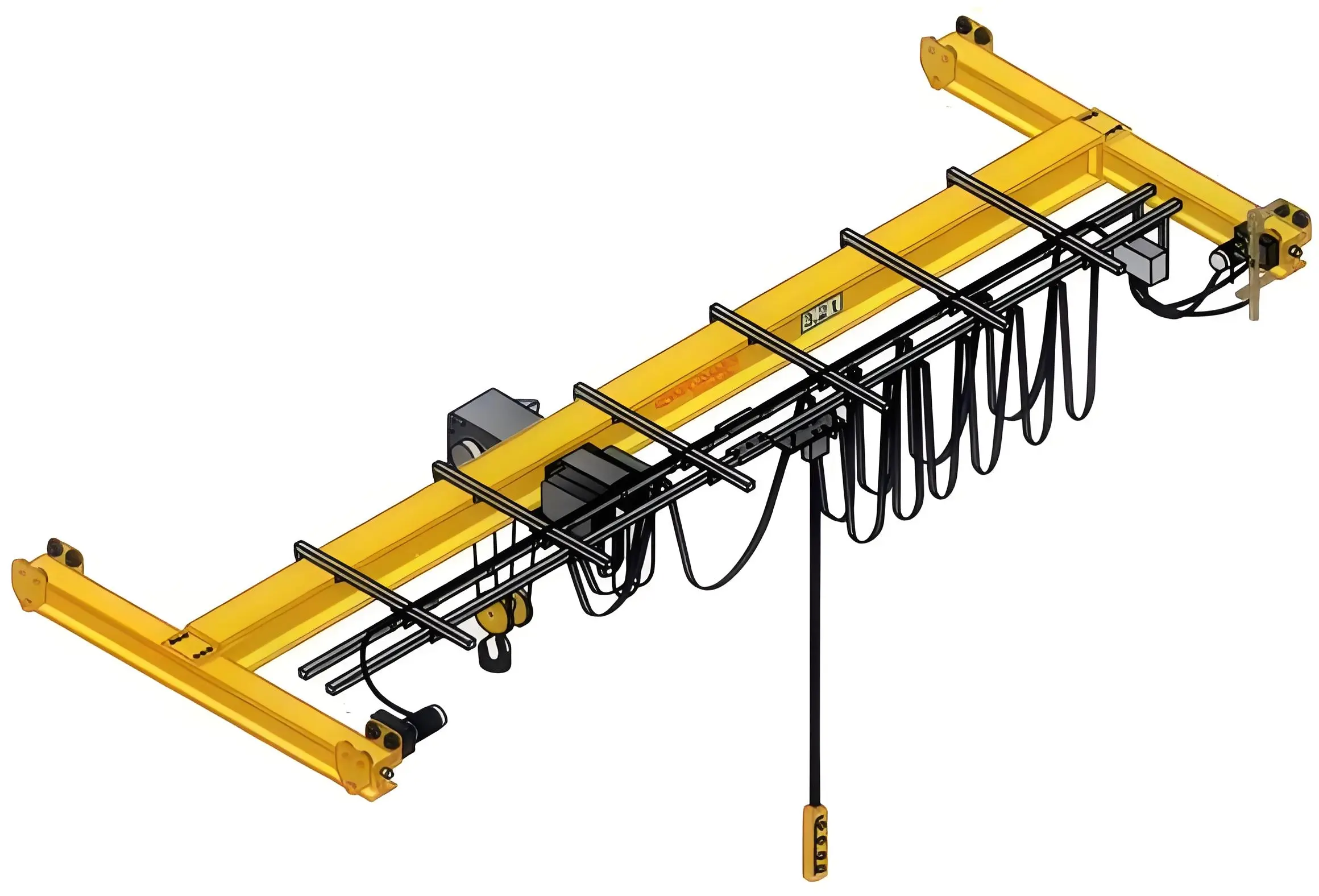
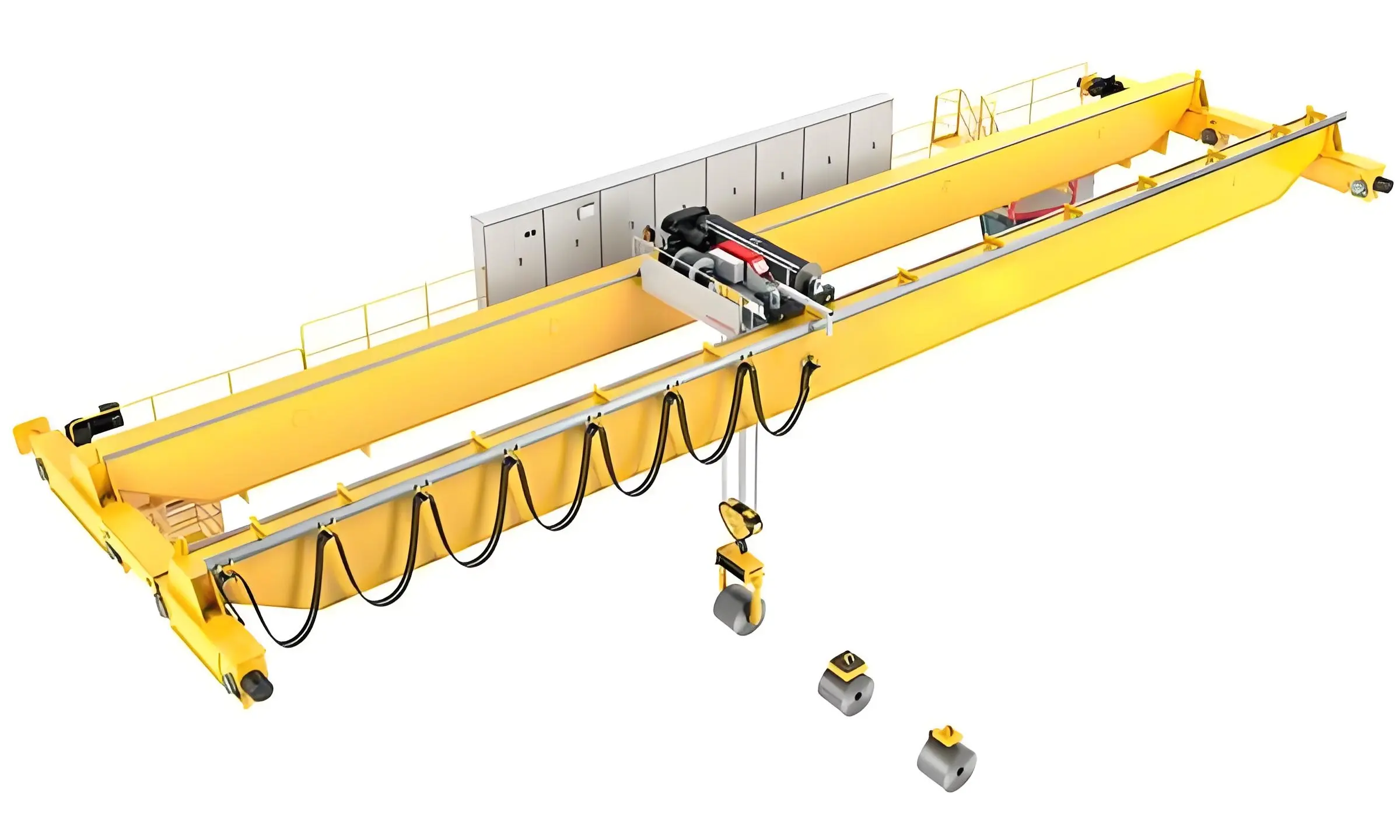
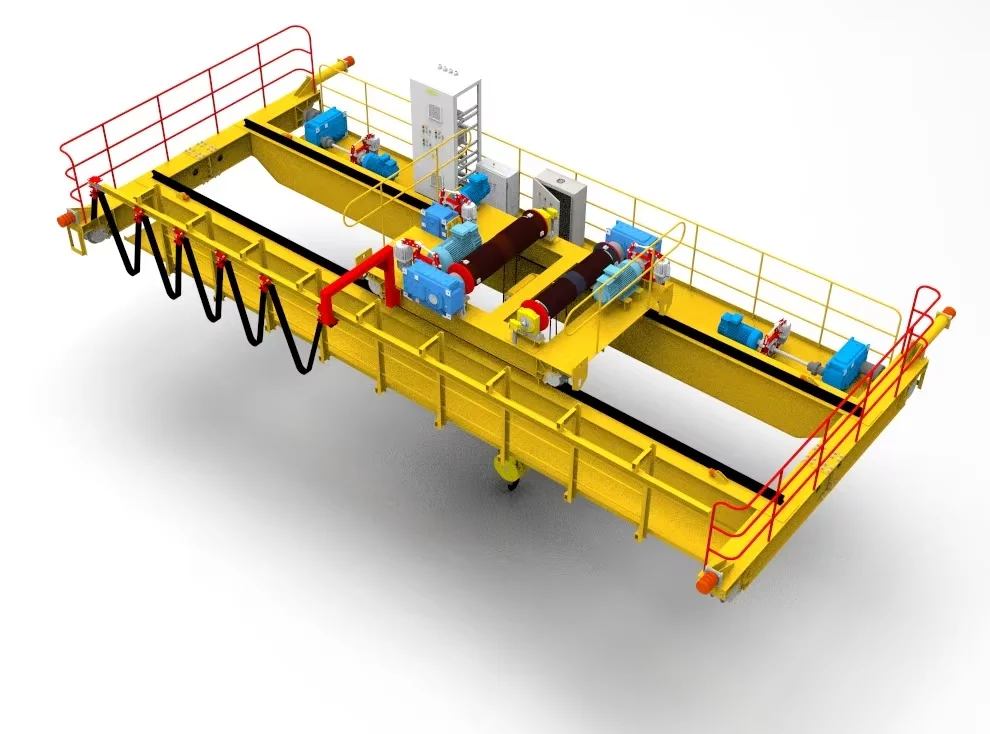
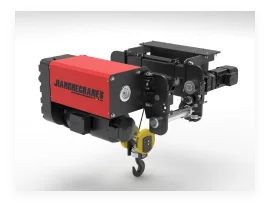
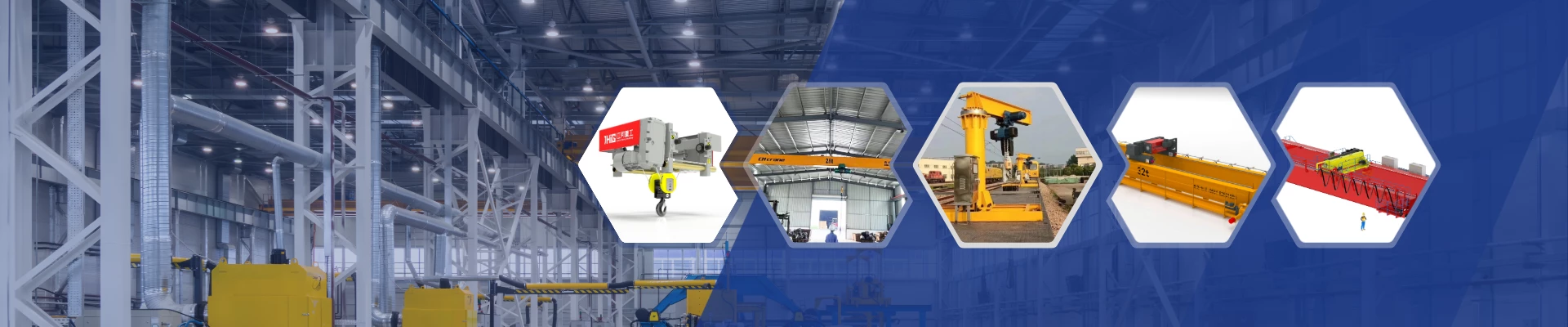
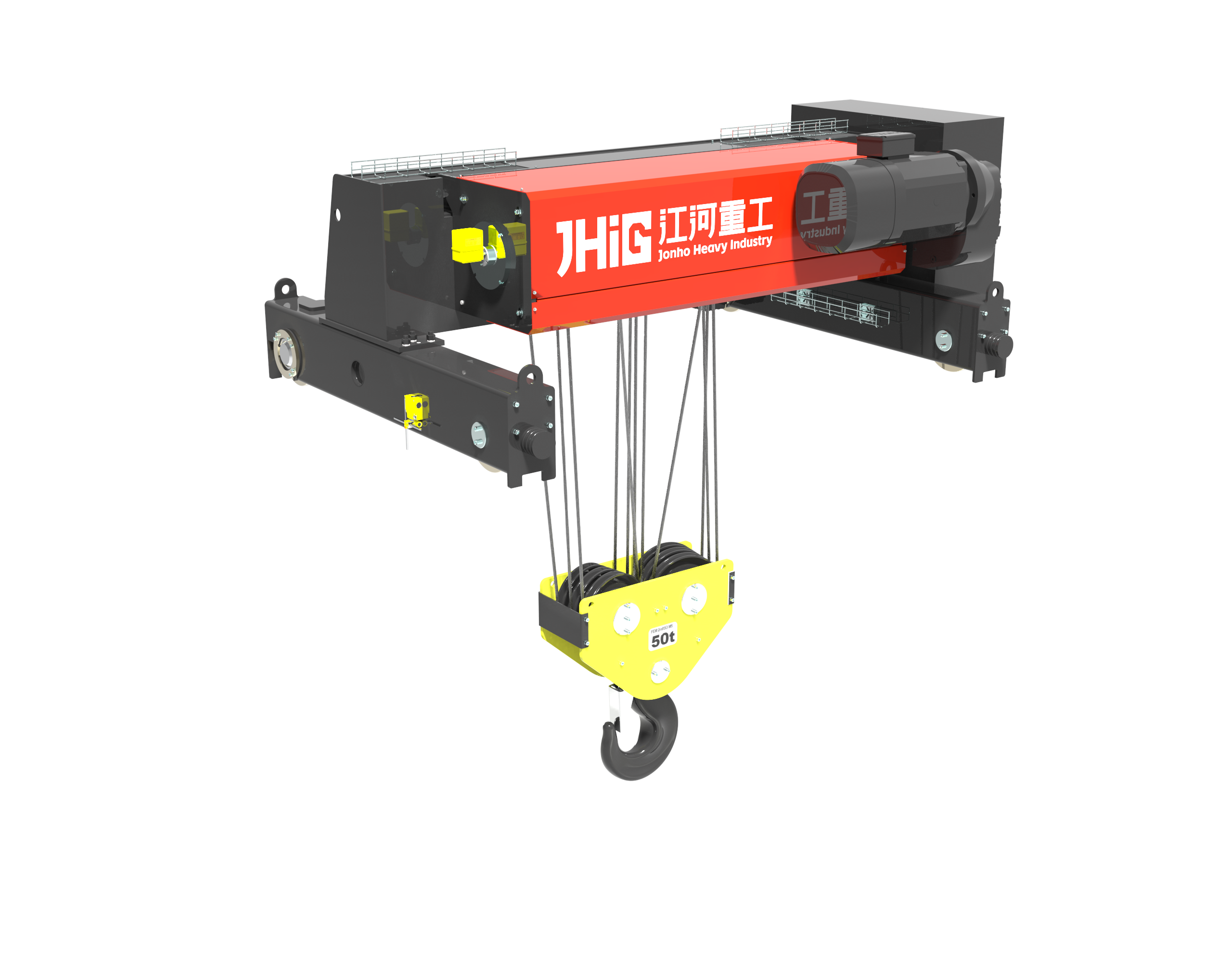
JHG European standard double-beam wire rope electric hoist is an efficient lifting device compatible with double-beam cranes. It features a modular design for flexible component assembly and easy maintenance, utilizes lightweight materials to reduce its own weight and the load-bearing pressure of the factory, and is equipped with a ‘three-in-one’ drive structure and a misalignment box type trolley frame to ensure stable operation. Additionally, it combines reliable components such as a hardened gear surface reducer and dual-disc brakes, providing frequency conversion precise positioning, overload protection, and fault self-diagnosis functions. It meets the heavy load lifting needs in scenarios such as factories and docks, making it an optimal choice for enhancing lifting efficiency and operational safety.
Applicable Standards
ISO 4301 – Cranes Classification:Classification of cranes and hoisting equipment according to working conditions, load cycles, and duty requirements.
ISO 8686 – Cranes Design Principles:Design principles and calculation methods for crane structures and mechanical components to ensure safety and reliability.
ISO 9927 – Cranes Inspections:General requirements for crane inspections, including inspection procedures and safety checks.
ISO 12100 – Safety of Machinery:General principles for machinery safety design, risk assessment, and risk reduction.
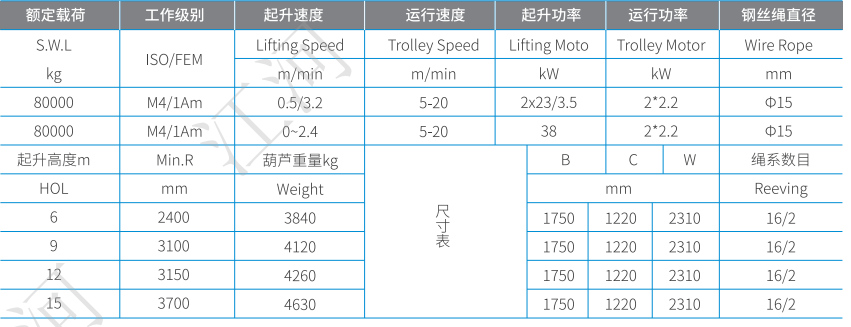
Technical parameters
Featured Design
Modular Concept:It adopts a modular structure, where core components of the electric hoist such as the motor, reducer, brake, and drum are all independent standard modules. This facilitates quick replacement of faulty parts as needed, simplifies maintenance, and enables flexible product combination—allowing efficient assembly of different versions to meet varying working conditions and parameter requirements, such as lifting capacity, speed, and travel distance.
Lightweight Construction:A large number of lightweight yet high-strength materials (e.g., aluminum alloy and high-strength steel) are used. For instance, aluminum alloy is applied to manufacture the motor housing and reducer casing exterior. This not only reduces the overall weight of the equipment and lowers wheel pressure—reducing load requirements on load-bearing rails and factory building structures—but also enhances corrosion resistance.
Low-Noise Design:Multiple measures are taken, including optimizing gear shape, improving assembly precision, and designing operation buffers. Gears undergo high-precision grinding, ensuring accurate tooth profiles and smooth transmission meshing. Combined with shock-absorbing pads and sound insulation covers, the equipment’s operating noise is significantly reduced, creating a quieter working environment.
Featured Structure
“Three-in-One” Drive Architecture: The traveling mechanism of the electric hoist mostly adopts a “motor + reducer + brake” three-in-one drive form. These three components are tightly connected and directly mounted on the wheel axle, enabling fast and efficient power transmission, reducing intermediate transmission links, minimizing the size of the traveling mechanism, and making the hoist’s traveling drive system along double-girder rails more compact and sophisticated.
Offset-Rail Box-Type Trolley Frame:The trolley frame is often designed as an offset-rail box structure. The box-type beam itself has excellent bending and torsion resistance; the offset-rail layout keeps the hoist’s center of gravity closer to the inner side of the rails. This improves the lateral stability of the trolley when traveling on double-girder rails, reduces the risk of rollover, and ensures outstanding anti-overturning performance when lifting heavy loads.
Compact Winding System:It adopts an optimized compact drum layout, with the drum length shortened to fit closely with the lifting motor and reducer. This enables orderly winding of the wire rope within a limited space. Equipped with a high-precision rope arranger, the wire rope can be accurately aligned on the drum, preventing rope biting and tangling.
Basic Configuration
Lifting Motor:A double-winding squirrel-cage pole-changing motor is usually selected, which enables switching between high and low speeds to meet the differentiated needs of fast handling and slow precise positioning. The motor housing is mostly made of aluminum alloy, with an insulation class of Class F and an protection class of IP54 or higher, ensuring excellent heat dissipation and resistance to environmental erosion.
Reduction Device:A hard-tooth-surface planetary gear reducer or cylindrical gear reducer is generally configured. Gears undergo carburizing, quenching, and other treatments, resulting in hard, wear-resistant tooth surfaces. The transmission efficiency typically reaches over 90%, and most reducers require no lubricating oil replacement throughout the electric hoist’s service life.
Brake Components:A dual-disc electromagnetic disc brake is standard, installed at the rear of the motor. When power is cut off, the brake discs instantly engage for braking, with a reliable braking coefficient of no less than 1.8. It is also equipped with an automatic brake clearance compensation structure, which automatically maintains a reasonable brake clearance when the brake pads wear down.
Electrical Components: Key components in the main electrical circuit and control circuit (e.g., contactors, circuit breakers, and relays) are often sourced from internationally renowned brands such as Siemens and Schneider. These components feature sensitive on-off response, strong anti-interference ability, and long electrical service life, ensuring stable operation of the electrical system.
Core Functions
Precise Positioning Function: Frequency conversion speed regulation technology is widely adopted, enabling fine adjustment of lifting and traveling speeds. It can flexibly control everything from smooth low-speed startup and high-speed travel to precise low-speed parking, allowing loads to be lifted and placed at target positions with minimal deviation. This makes it suitable for tasks requiring high placement precision.
Overload Warning Function: It has a built-in overload limiter, which generally detects the load via a pressure sensor or wire rope tension detection element. When the lifting weight exceeds the rated load, the overload device immediately triggers an audible and visual alarm and automatically cuts off the lifting power circuit to prevent the hoist from continuing to lift, avoiding safety accidents caused by overload.
Fault Self-Diagnosis Function:Some high-end models are equipped with an intelligent fault diagnosis module, which monitors equipment parameters in real time—such as motor temperature, brake on/off status, and changes in wire rope tension. Once an abnormality is detected, it can quickly analyze the fault type and location, and intuitively display fault codes or prompts via the operation panel display or blinking indicator lights on the body, facilitating maintenance by technicians.