

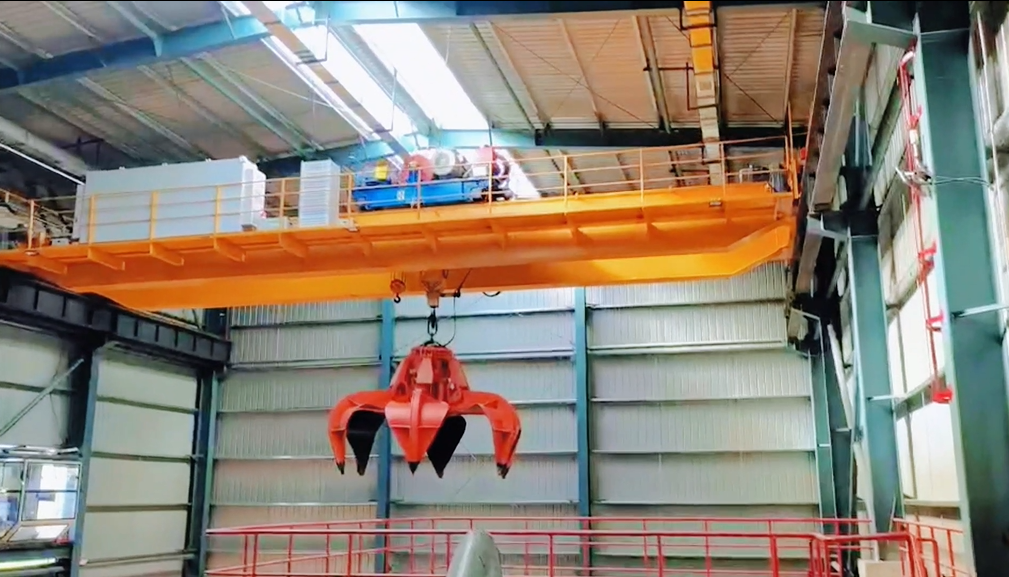
The Critical Role of Refuse Grab Cranes in Waste-to-Energy Plants
A Refuse Grab Crane is far more than a simple lifting device in a waste-to-energy plant. Installed beside the waste pit, it plays a critical role in continuously feeding waste into the incinerator and handling, storing, and transferring bulk materials. Because waste handling can require continuous operation around the clock, the crane’s stability, durability, safety, and control performance are essential to the overall operation of the plant.
For this application, selecting a Refuse Grab Crane based only on lifting capacity is not enough. The equipment must be designed for frequent grab, lifting, transferring, and unloading cycles. Its braking system, grab construction, drive system, steel wire rope arrangement, electrical protection, and corrosion protection all have a direct impact on service life and maintenance requirements.
Heavy-Duty Grab Design for Complex Waste Materials
The working environment inside a waste pit is particularly demanding. Waste can contain corrosive liquids from food waste as well as sharp and hard materials such as construction debris and metal scrap. Therefore, the grab needs suitable wear resistance and corrosion protection.
The grab body can be manufactured from 16Mn steel, while the bottom and side cutting edges can use high-strength wear-resistant material with a hardness of HB400. Self-lubricating special-alloy bushings and heat-treated 42CrMo pins can further improve the durability of the grab under demanding working conditions.
Stable Lifting and Reliable Drive Systems
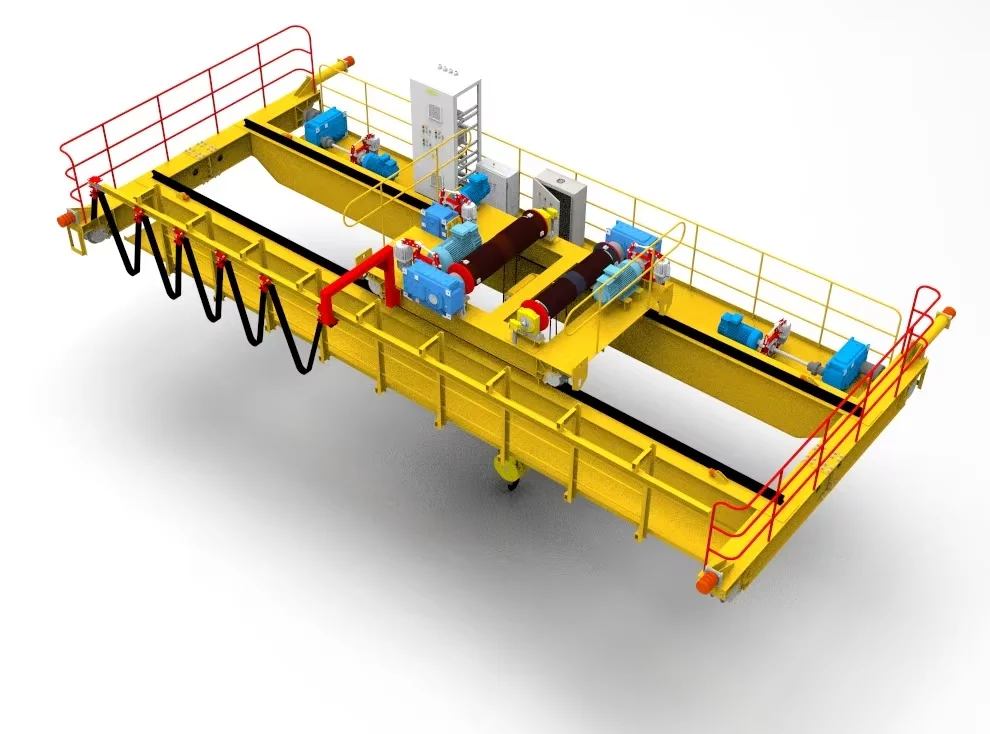
The crane’s structure and lifting arrangement are also important for stable operation. A double-drum, four-rope lifting arrangement can help reduce grab swinging and rotation during material transfer. An integrated arrangement of the wire-rope and cable drums can also help reduce cable-related failures and unnecessary downtime.
The drive system should be suitable for frequent operation. The large and small crane travelling mechanisms can use integrated three-in-one drive units with hardened gear reducers. This configuration provides stable movement while simplifying maintenance and helping reduce the frequency of component replacement.
Safety Protection for Continuous Operation
Safety protection is another key consideration. Heavy-duty rope guides can help prevent the wire rope from leaving the drum groove and can provide warning and stop functions when abnormal conditions occur.
Double-shoe electric hydraulic-pusher brakes with manual release and automatic wear compensation can provide reliable braking without frequent manual adjustment, helping reduce the risk of grab-related accidents.
The electrical and mechanical components also need to withstand the demanding environment of a waste pit. A lifting motor with IP55 protection, temperature monitoring, and forced-air cooling can provide better protection against dust and operating heat.
Other protective functions can include low-voltage protection, phase-sequence protection, overload protection, emergency stop functions, warning lights, and audible alarms.
Corrosion Protection and Long-Term Durability
Corrosion protection should not be overlooked. For waste-handling environments with dust and corrosive conditions, the surface preparation and coating system are important factors in equipment durability.
The supplied technical information specifies shot blasting or sand blasting to Sa 2.5 before coating, with a total paint-film thickness above 200 μm.
The braking system should also be selected according to the operating characteristics of the crane. During normal operation, electrical braking can provide smoother deceleration, while the mechanical brake is intended to engage at low speed. The supplied technical information specifies mechanical brake activation when the speed is below 3% of the rated speed, helping reduce unnecessary brake-disc wear during high-speed operation.
Intelligent Control for Modern Waste-to-Energy Plants
Modern waste-to-energy plants are also moving toward unmanned and intelligent operation. An intelligent Refuse Grab Crane can incorporate high-precision weighing, anti-sway control, and automatic path planning to support continuous operation while reducing manual intervention.
Remote operation and automatic grabbing and unloading can further improve operating efficiency for high-intensity waste-handling applications.
For larger waste-to-energy plants equipped with multiple grab cranes, intelligent control software can coordinate several cranes, optimize their operation, and help avoid collisions. This makes the control system and the manufacturer’s software and engineering capabilities important considerations when evaluating an intelligent crane solution.
Applications of Refuse Grab Cranes
Refuse Grab Cranes are also suitable for handling a variety of bulk and loose materials. Depending on the application, grab cranes can be used for materials such as waste, coal, ore, limestone, quartz powder, nickel, scrap metal, sand, and other bulk materials in power plants, warehouses, steel plants, ports, cement plants, waste recycling facilities, mines, railway facilities, and industrial workshops.
A Complete Solution for Reliable Material Handling
Overall, a Refuse Grab Crane should be evaluated as a complete material-handling system rather than simply as a crane equipped with a grab.
Structural design, grab materials, drive units, braking systems, wire-rope protection, electrical safety, corrosion protection, and intelligent control all contribute to reliable operation. For waste-to-energy plants requiring frequent and continuous waste handling, these factors are essential for maintaining safe and stable material feeding and reducing long-term maintenance requirements.