

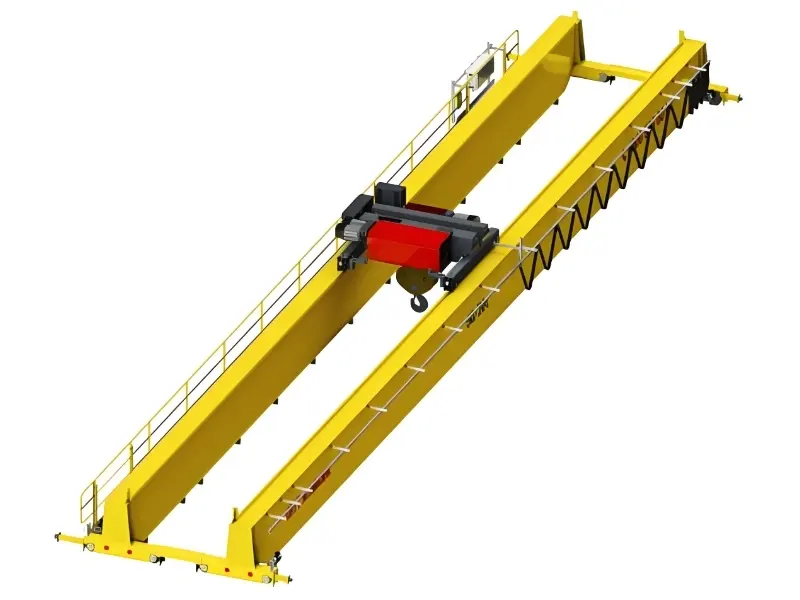
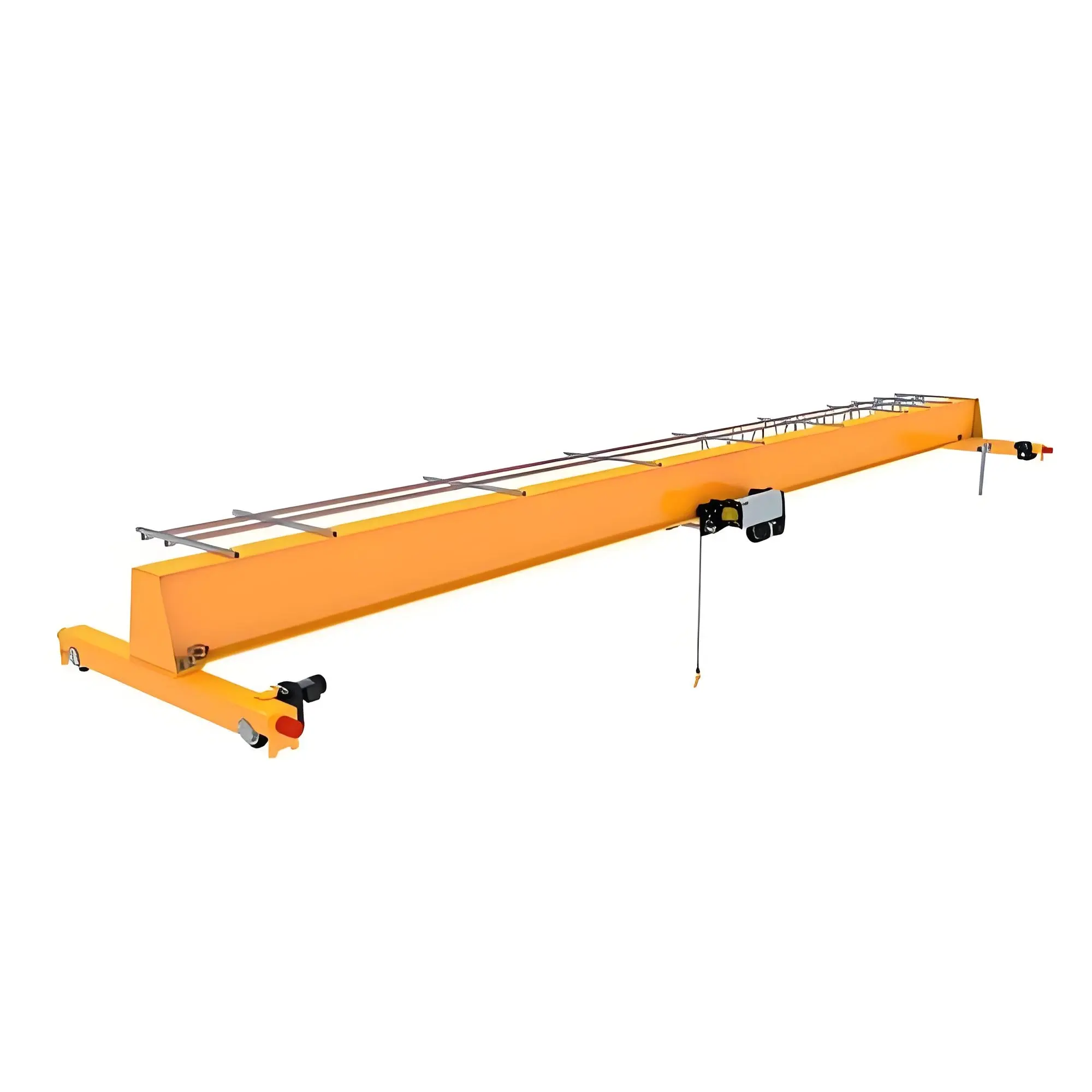
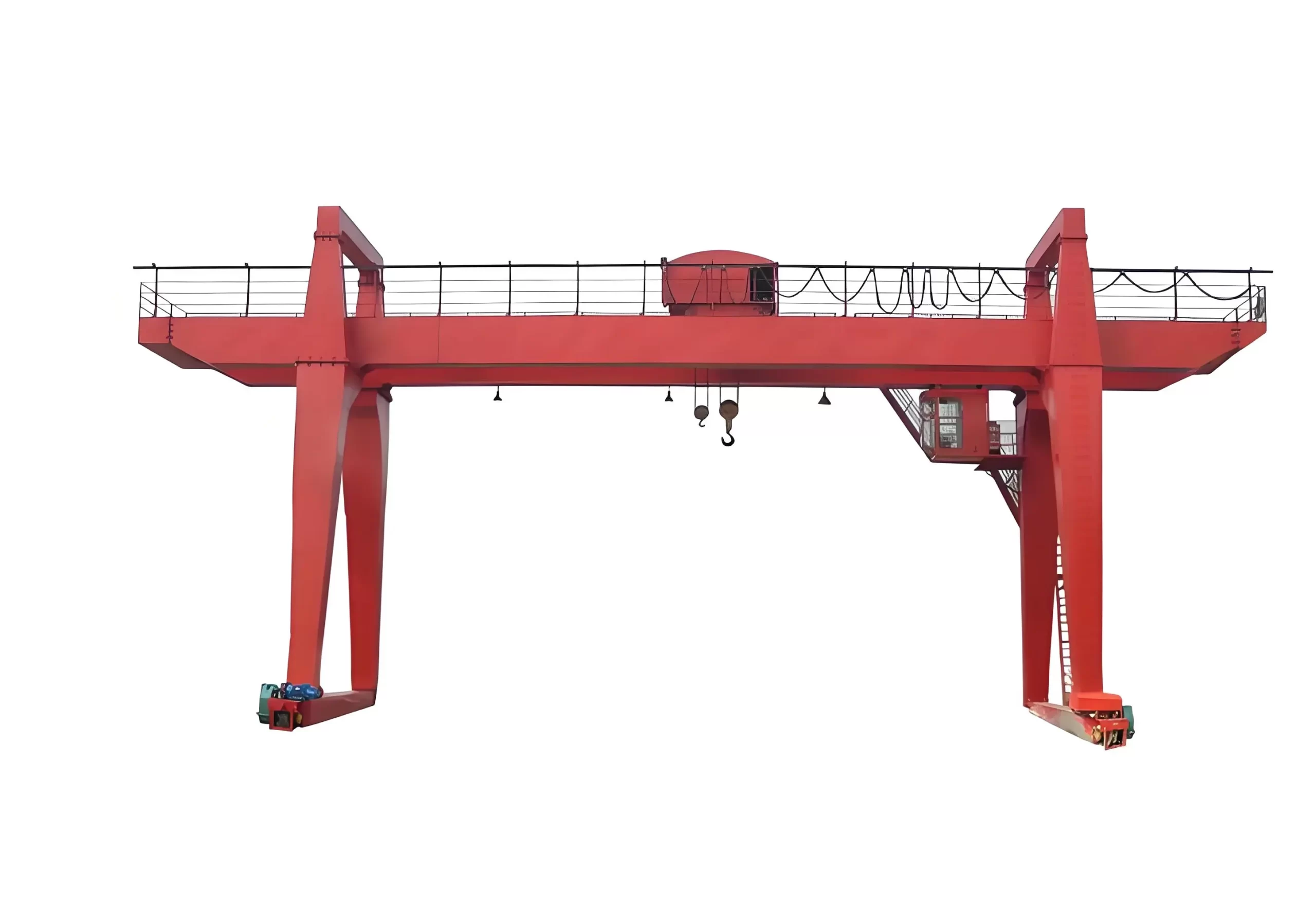
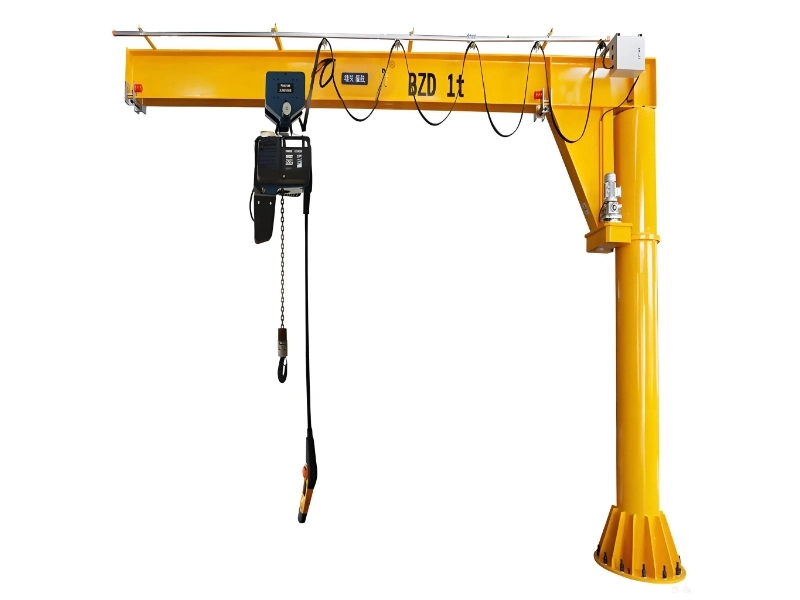
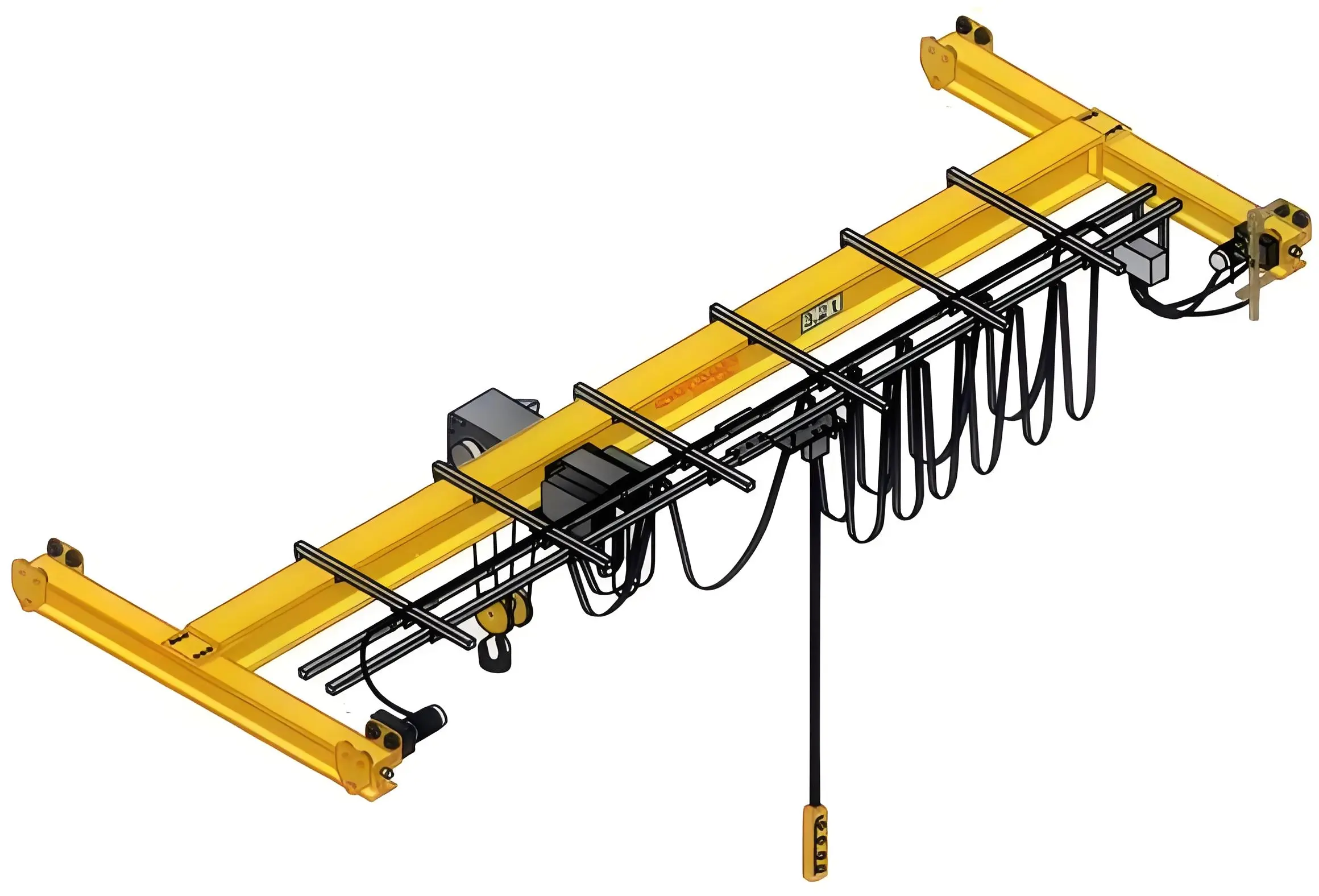
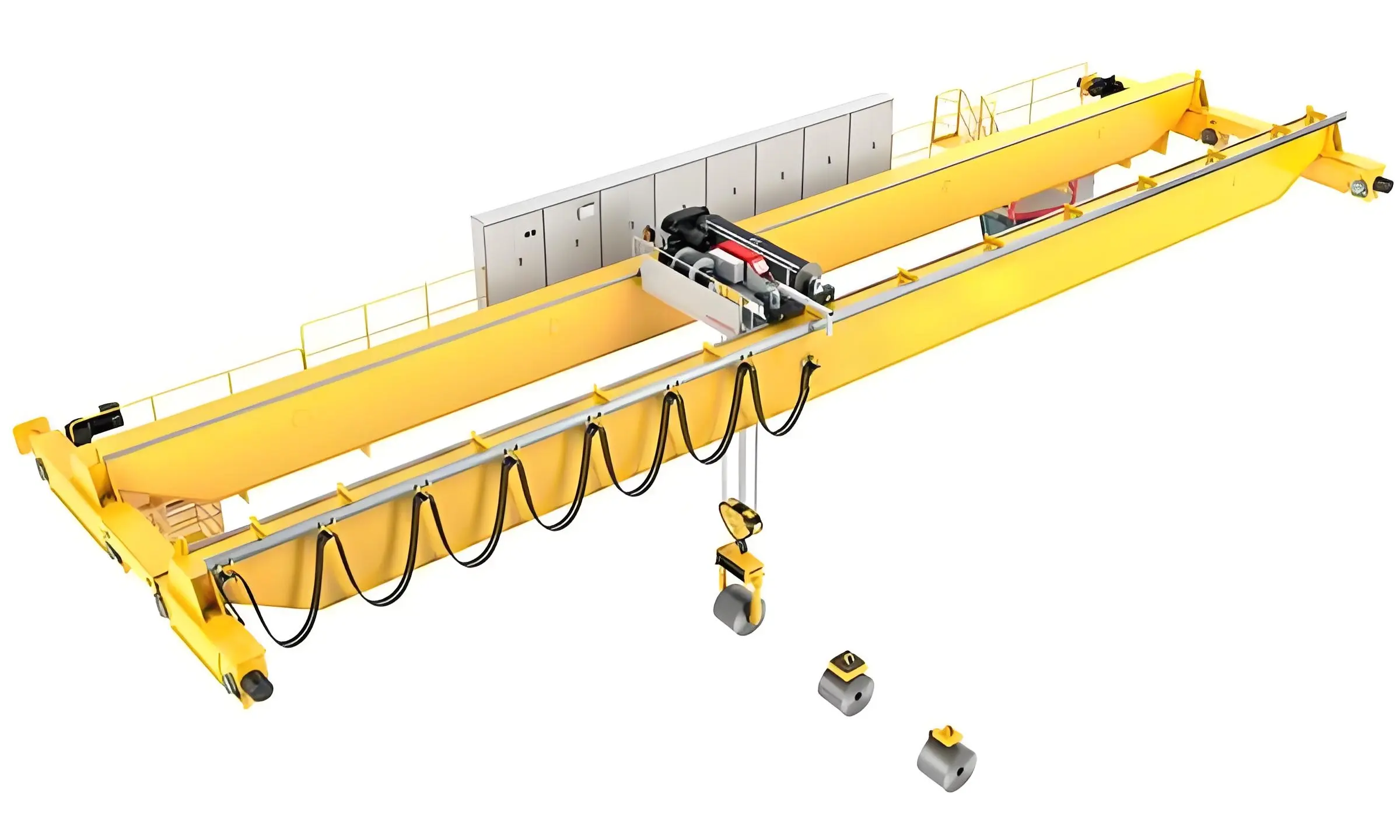
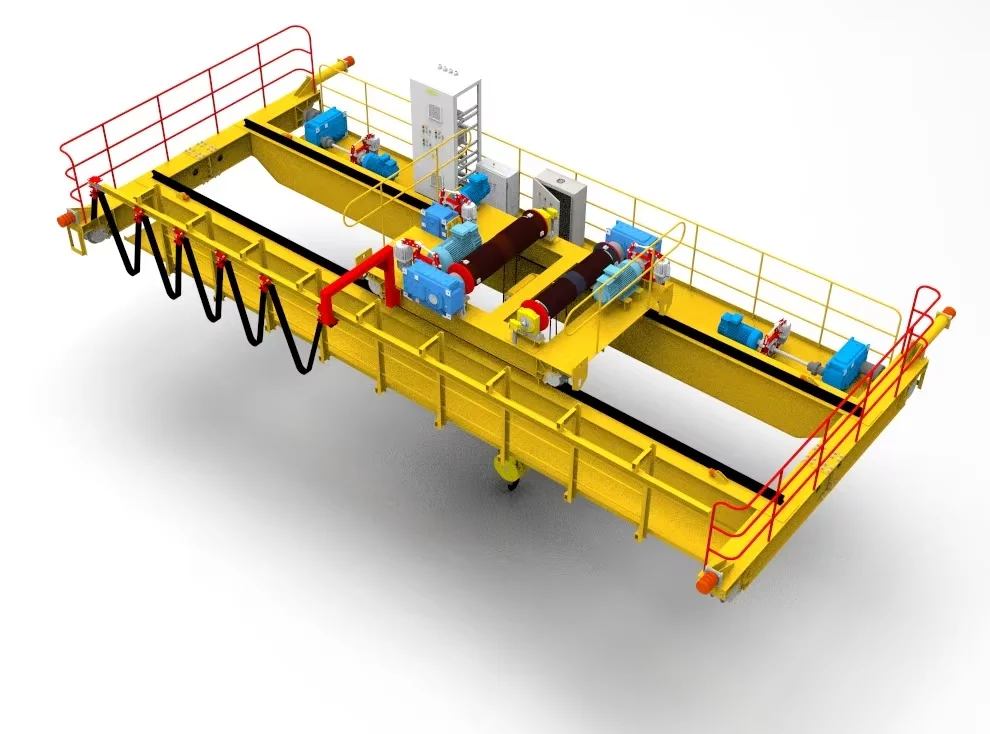
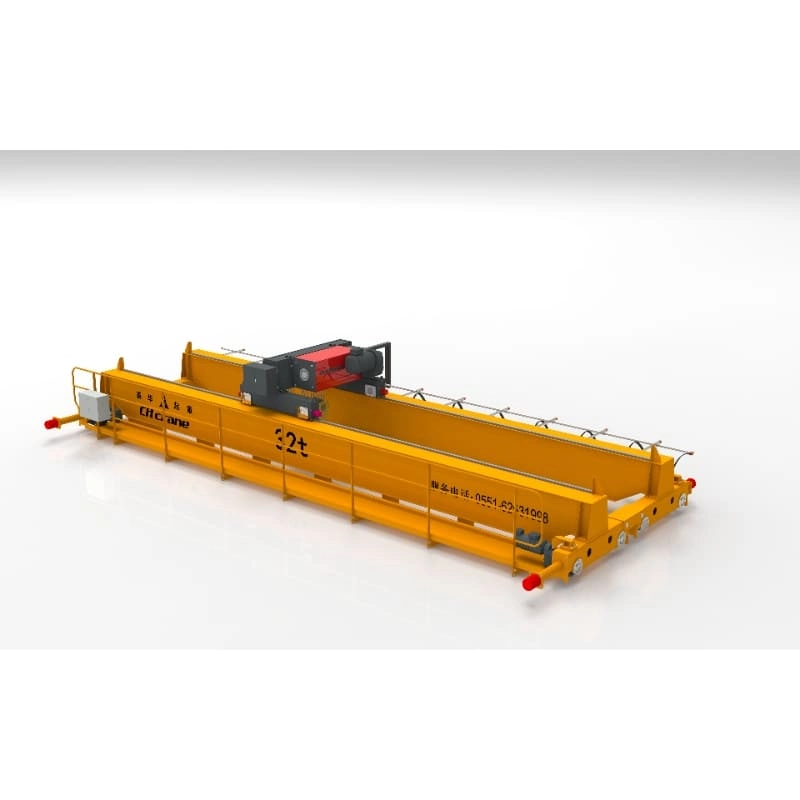
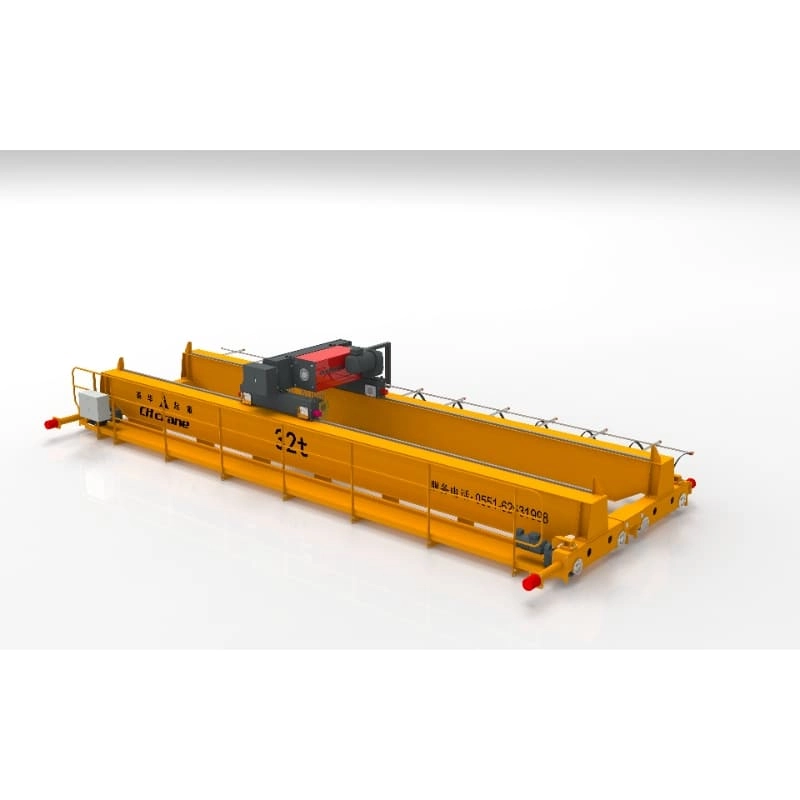
With the development of modern manufacturing, industrial production requires lifting equipment that offers not only high lifting capacity, but also higher efficiency, better space utilization, lower energy consumption, and more convenient maintenance. Against this background, the European-style double girder electric overhead crane has become an increasingly popular solution for modern industrial applications.
Compared with traditional double girder overhead cranes, the new European-style design adopts a more advanced approach to structural optimization, mechanical configuration, drive technology, and intelligent control. The main differences can be summarized as lightweight design, compact structure, optimized performance, energy efficiency, and intelligent operation.
1. Different Design Concepts
Traditional overhead cranes generally focus on structural strength and durability. To ensure sufficient load-bearing capacity, their main girders, end carriages, trolleys, and other components are often designed with relatively large dimensions and safety margins. This provides reliable performance for heavy-duty lifting applications, but may also result in higher self-weight and greater space requirements.
The European-style double girder crane places greater emphasis on optimized design and overall system efficiency. Through structural calculations, finite element analysis, optimized component selection, and modular design, unnecessary material and dead weight can be reduced while maintaining the required strength and safety.
This design philosophy allows the crane to achieve the required lifting performance with a more compact structure, making better use of available workshop space.
2. Lightweight and Compact Structure
One of the most noticeable differences is the structural design.
Traditional cranes generally have relatively heavy bridge structures and large components. The larger self-weight increases the load imposed on the building structure and crane runway, while also increasing the energy required for crane movement.
The new European-style double girder crane uses optimized girders, end carriages, trolley frames, and mechanical components to reduce unnecessary weight. The structure is designed to be compact, rigid, and efficient.
The optimized structure can provide several benefits:
Reduced crane self-weight
Lower wheel loads
Smaller space requirements
Better utilization of workshop height
Improved lifting height within the same building
Reduced structural load on the supporting building
For workshops where available headroom is limited, the compact design can be particularly valuable.
3. Difference in Hoisting Mechanism and Mechanical Components
Traditional cranes often use relatively large and independent mechanical components. While this configuration is mature and reliable, it may require more installation space and involve more components for maintenance.
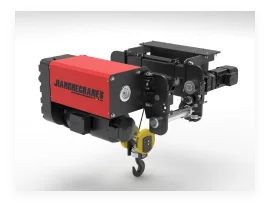
European-style cranes generally use compact and modular hoisting units. The hoisting mechanism, gearbox, motor, brake, and other components can be integrated into a more compact arrangement.
Depending on the required working conditions, advanced configurations such as geared motors, variable-frequency drives, and high-efficiency motors can also be used.
This optimized arrangement helps reduce the overall size of the trolley while improving accessibility for inspection and maintenance.
4. Higher Running Efficiency and Positioning Accuracy
Traditional cranes can meet basic lifting and transportation requirements, but their operating performance may be limited by conventional drive and control systems.
European-style double girder cranes commonly use variable-frequency drive (VFD) technology for lifting, trolley travel, and crane travel. The speed can be adjusted according to the actual operating requirements.
The advantages include:
Smooth starting and stopping
Reduced mechanical impact
Adjustable operating speed
More accurate positioning
Lower load swing
Improved operating efficiency
Reduced wear on mechanical components
For production environments involving frequent lifting and positioning operations, these features can significantly improve material-handling efficiency.
5. Energy Consumption and Operating Costs
Crane operating costs are closely related to its self-weight, motor efficiency, working frequency, and drive system.
Traditional cranes with heavier structures may require greater power during acceleration and movement. In contrast, the lightweight structure of a European-style crane reduces the mass that needs to be moved.
Combined with high-efficiency motors and variable-frequency control, the crane can achieve more efficient energy utilization.
Therefore, the difference is not limited to the initial purchase price. The total cost of ownership, including electricity consumption, maintenance, component replacement, and downtime, should also be considered when selecting a crane.
6. Intelligent Control and Safety
Another important difference is the level of control and monitoring.
Traditional cranes can use basic electrical control systems to perform lifting, lowering, trolley travel, and bridge travel. European-style cranes can integrate more advanced control technologies according to project requirements.
For example, a PLC-based control system and human-machine interface (HMI) can provide information about operating conditions and make crane operation more intuitive.
Optional intelligent functions may include:
Overload protection
Limit position protection
Variable-frequency control
Anti-sway control
Fault monitoring
Load monitoring
Remote monitoring
Operating status indication
These functions can improve operational safety and help maintenance personnel identify potential problems at an earlier stage.
7. Maintenance and Service
The structural optimization of European-style cranes also affects maintenance.
Traditional cranes may contain numerous independently installed components, which can make inspection and troubleshooting more complicated.
The modular design of a European-style crane makes many components easier to access, inspect, replace, and maintain. Standardized components can also simplify spare-parts management.
Proper preventive maintenance remains essential for both types of cranes. Regular inspection of brakes, wire ropes, wheels, electrical systems, limit switches, gearboxes, and other safety-critical components is necessary to ensure reliable operation.
8. Application Differences
Traditional double girder overhead cranes remain an effective choice for many heavy-duty applications, especially where high lifting capacity, rugged construction, and continuous industrial operation are required.
European-style double girder cranes are particularly suitable for modern workshops where space utilization, operating efficiency, precision, energy consumption, and intelligent control are important considerations.
Typical applications include:
Machinery manufacturing
Steel processing
Automotive manufacturing
Equipment manufacturing
Warehousing and logistics
Power plants
General industrial production
Heavy equipment assembly
Infrastructure and construction-related manufacturing
The choice should ultimately be based on the actual lifting capacity, span, lifting height, duty class, working environment, operating frequency, and building conditions.
9. European-Style vs. Traditional Double Girder Crane
| Item | Traditional Double Girder Crane | European-Style Double Girder Crane |
|---|---|---|
| Design concept | Strength and conventional structure | Lightweight and optimized design |
| Structural size | Relatively large | More compact |
| Self-weight | Relatively high | Optimized and reduced |
| Space utilization | Moderate | High |
| Drive system | Conventional or variable-frequency | Commonly optimized with VFD |
| Positioning | Standard | Higher precision |
| Starting and stopping | Relatively less smooth | Smoother |
| Energy efficiency | Standard | Higher efficiency potential |
| Control system | Basic to conventional | More intelligent and configurable |
| Maintenance | Conventional | More modular and convenient |
| Application | Heavy-duty general applications | Modern and efficiency-oriented applications |
The European-style double girder electric overhead crane is not simply a smaller version of a traditional crane. Its main difference lies in the overall design philosophy.
By combining lightweight structural design, compact mechanical configuration, efficient drive technology, variable-frequency control, and optional intelligent functions, the European-style crane can provide better space utilization, smoother operation, higher positioning accuracy, and potentially lower operating and maintenance costs.
However, traditional double girder cranes still have their own advantages, particularly for demanding heavy-duty applications. Therefore, the best solution should be selected according to the actual working conditions rather than simply choosing one design over another.
For modern industrial facilities seeking a balance between lifting performance, efficiency, safety, space utilization, and long-term operating costs, a European-style double girder electric overhead crane can be an efficient and future-oriented lifting solution.